Bioethics
Triumphs and Ethical Concerns of Animal De-Extinction
Colossal Biosciences says it brought back the dire wolf. What it made is a gray wolf with edited genes, and the gap between the two is an ethics problem.
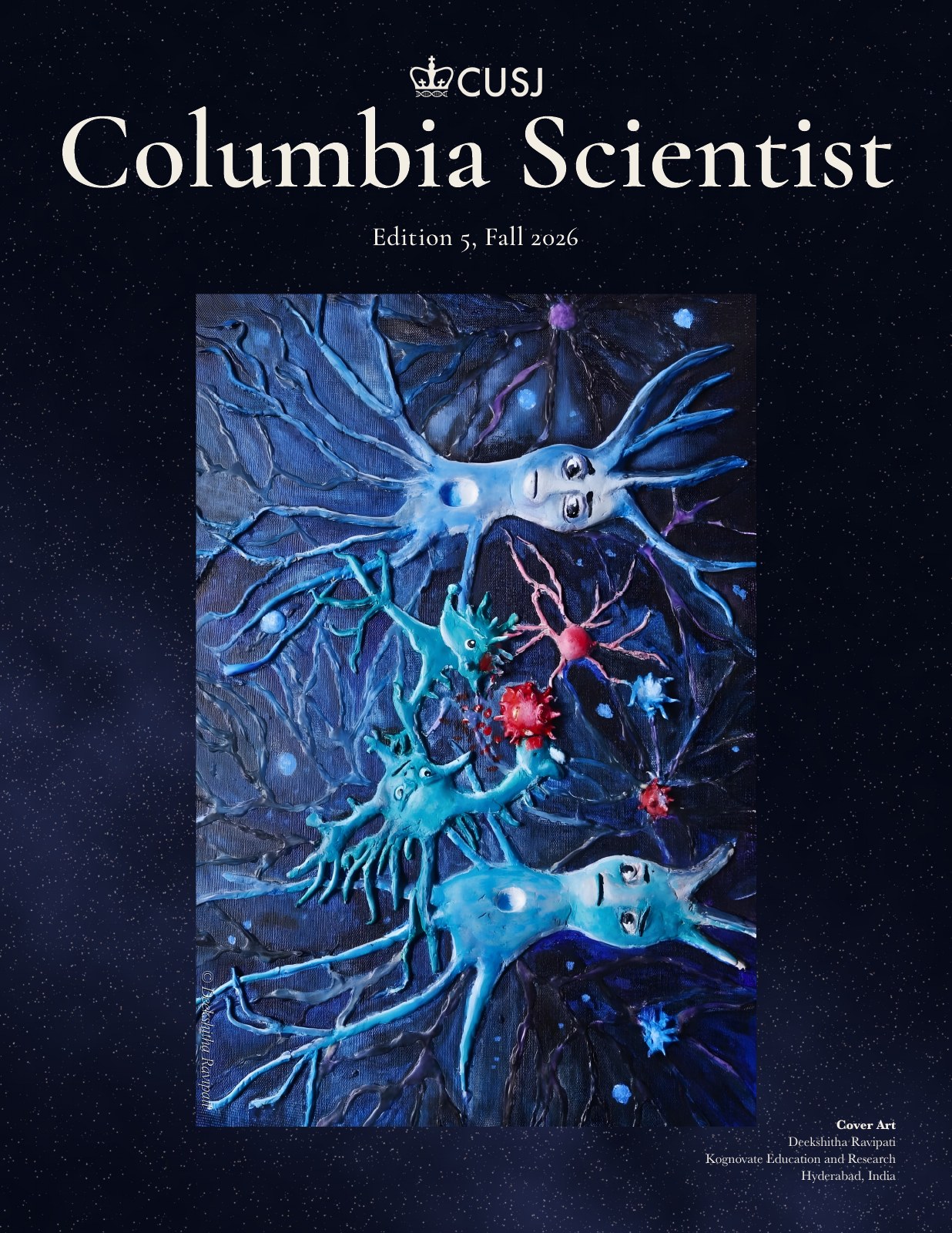
Cover · Microglia in Neurovirology: Friend or Foe?, by Deekshitha Ravipati, Kognovate Education and Research, Hyderabad, India. 3D clay.
Download the issue (PDF)Current edition
Bioethics
Colossal Biosciences says it brought back the dire wolf. What it made is a gray wolf with edited genes, and the gap between the two is an ethics problem.
Also in this edition
August 18, 2026
What Split-Brain Patients Reveal About the Architecture of Consciousness and the SelfAugust 18, 2026
Disrupting Dystrophinopathies: The Road to AnswersAugust 18, 2026
Running Towards the StingColumbia Scientist selects a small number of exceptional pieces each cycle: opinion editorials, briefings, letters, science art, and podcast scripts.
Every accepted piece is worked on closely with an editor, published in the annual edition and on this site with a permanent citable page, and released under a CC BY 4.0 licence. You keep the copyright. We welcome work from accomplished contributors at every stage: exceptional students, graduate researchers, and practicing scientists. There are no fees.
2026–2027 Edition: submissions close January 15, 2027; decisions by late April 2027.
What editors look for
Columbia Scientist was founded in 2022 as the non-research journal of the Columbia Undergraduate Science Journal. Where CUSJ publishes original research, Columbia Scientist publishes the writing around it: argument, explanation, commentary, and art. Submissions come from exceptional students, researchers, and practicing scientists around the world, and are reviewed by the editorial board at Columbia, advised by a faculty board of ten Columbia professors.
Faculty advisory board