Neuroscience
Microglia: Weaving the Link Between Hypertension and Alzheimer’s
High blood pressure and Alzheimer’s share a culprit in microglia, the brain’s immune cells, which turn from protectors into a source of chronic inflammation.
- Published in
- Edition 5, Fall 2026
- Pages
- 36–38
- Licence
- CC BY 4.0
Introduction
Is Alzheimer’s just a brain disease? The simple answer is no. The complex answer takes us to the immune system, the unlikely force linking Alzheimer’s to another life-threatening disease, hypertension. Alzheimer’s is a neurodegenerative disorder that leads to memory loss and cognitive decline, eventually hindering the ability to conduct daily activities. Hypertension, commonly known as high blood pressure, is a condition noted for an excessive blood pressure against the artery walls and may maintain hidden roles in Alzheimer’s (Carnevale et al., 2012). Traditionally, this link has been marked by considering interactions between the nervous and cardiovascular systems. But, what if the immune system harnesses the power to accelerate the link between hypertension and Alzheimer’s? The catalyst facilitating the link between these deleterious conditions is none other than the brain’s resident immune cells, the microglia.
Microglial-Induced Inflammation: A Double-Edged Sword
Inflammation is scientifically regarded as the body’s natural defense mechanism against injury, infection, and toxins. When scraping your arm or fighting a cold, inflammation is the primary step on the road to recovery. Nonetheless, the inflammatory response is a double-edged sword: it protects during times of stress, but its perpetual presence provokes the transition to a harmful state, chronic inflammation. When such toxic conditions envelop the body, inflammatory signals are overstimulated, leading to chronic inflammation. Specifically, one type of immune cell in the brain, the microglia, clear toxins and damaged cells and refine neural connections imperative for learning and memory.
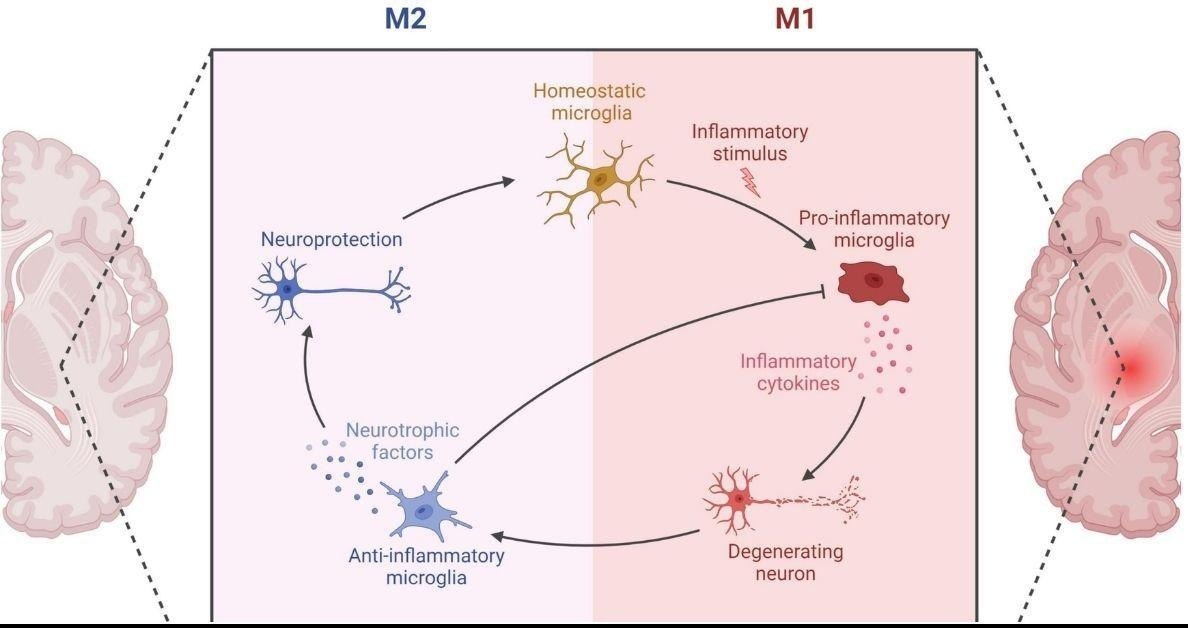
One of the major components triggering Alzheimer’s is none other than the deleterious tau protein. The tau protein aids in forming insoluble neurofibrillary tangles, disrupting communication between neurons and impairing memory. Alzheimer’s is triggered by the aggregation of amyloid-beta proteins (Aβ plaques) and neuron tangles, which disturb cell communication, induce cell death, and cause inflammation. The subsequent damage promotes cognitive decline. During the early stages of Alzheimer’s, microglia attempt to engulf and destroy Aβ plaques and dead neurons during a resting state (Figure 1). As an integral component of the immune system, they release growth factors and anti-inflammatory signals to protect neurons (Miao et al., 2023). However, throughout the disease’s progression, the microglia succumb to chronic activation via plaque, and the protective mechanisms it once possessed degrade. Although seemingly covert, these activated microglia trigger neuroinflammation in the release of pro-inflammatory proteins called cytokines (Miao et al., 2023). Over time, as the microglia remain activated, they lose their ability to clear plaque and the tau protein, leading to a buildup of plaque (Figure 1). This emerging research on microglial function suggests that Alzheimer’s disease is not only a neurological disorder but also an inflammatory one (Miao et al., 2023).
Figure 1: Microglia Transforming from Protective to Harmful in Alzheimer’s (Miao et al., 2023)
Furthermore, microglia exert a virulent role in the context of hypertension, significantly exacerbating the risk for Alzheimer’s. In paraventricular nucleus (PVN) neurons, a group of nerve cells that control hormones and homeostasis, microglia become activated when they detect excess ATP during hypertensive episodes (Figure 2). These activated microglia secrete pro-inflammatory signals, enhancing the body’s “fight or flight” response (Rao and Peng, 2024). During this response, the nervous system prepares the body to fight or escape from danger, increasing heart rate and cortisol, the stress hormone. This chain reaction further elevates blood pressure, the genesis of a vicious cycle.
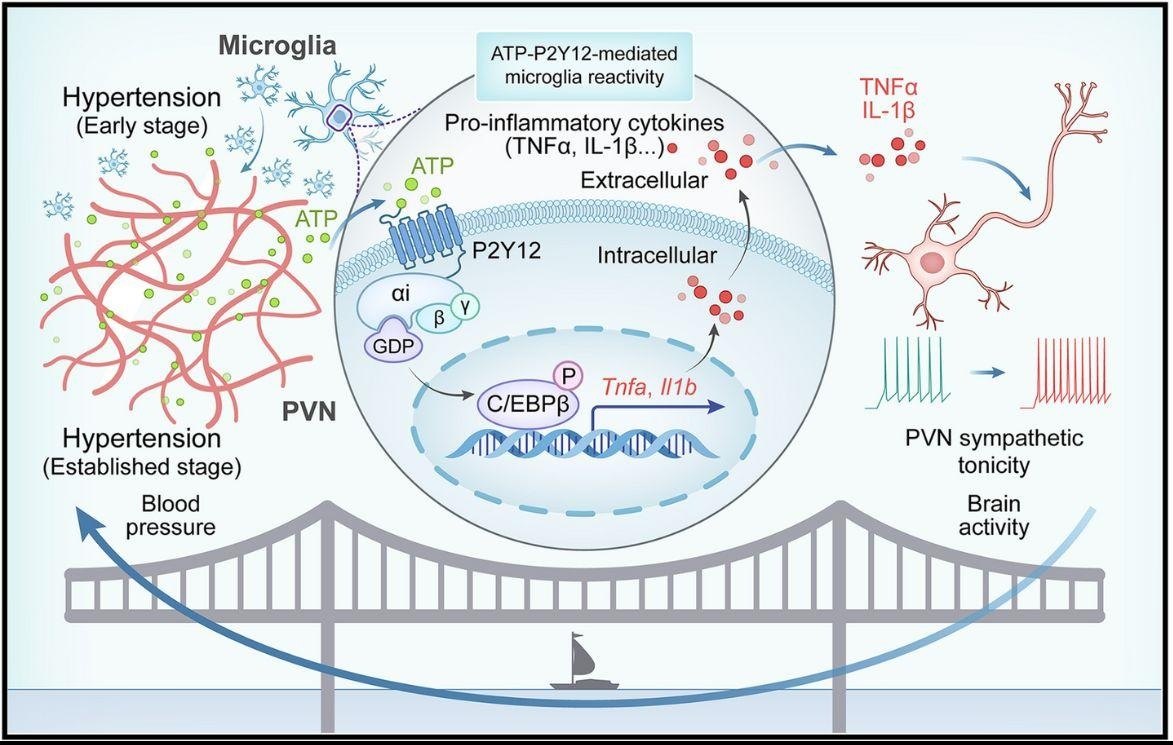
Figure 2: Microglia Responding to ATP During Hypertension (Rao and Peng, 2024)
Assessing the Link Between Alzheimer’s and Hypertension: A Chain Reaction
Neuroinflammation has become the deleterious link between Alzheimer’s and hypertension, endangering the body’s homeostasis. Hypertension diminishes the brain’s ability to clear Aβ plaques and can even increase their production, heightening neurotoxic conditions. Damaged blood vessels attributed to hypertension increase the permeability of the blood-brain barrier (BBB), a semipermeable membrane controlling what substances pass from the bloodstream to the brain (Santisteban et al., 2023). In turn, this allows the excessive penetration of pro-inflammatory proteins and microglia, stimulating chronic inflammation. Additionally, narrow blood vessels harm brain tissue and reduce blood flow, creating limited oxygen conditions that induce microglial activation (Mogi et al., 2025). These simultaneous effects — inflammation, neuronal death, vascular damage, protein accumulation — lead to cognitive decline, inducing memory loss, the primary symptom of Alzheimer’s.
Limitations and Implications: Are Pharmaceutical Strategies Enough for Modulation?
If hypertension is the catalyst expediting the onset of Alzheimer’s, then harnessing the power to target microglia is indispensable to remediating this global health concern.
Several pharmaceutical methods have been administered to reduce hypertension and target microglia: ACEs, ARBs, and clopidogrel. Angiotensin-converting enzyme inhibitors (ACEs) and angiotensin II receptor blockers (ARBs), generally used separately, are both antihypertensives that aid in relaxing blood vessels and managing fluid balance. Both drugs widen blood vessels by blocking the hormone angiotensin II, combating Alzheimer’s by decreasing inflammation and increasing blood flow to the brain (Lee et al., 2023). Additionally, clopidogrel, a blood thinner, inhibits a microglial receptor P2Y12, significantly reducing blood pressure spikes, while reducing Aβ plaque accumulation and the release of inflammatory markers (Maeda et al., 2021). Antihypertensives and clopidogrel are often used together to collectively control the inflammatory response.
However, studies have reported mixed results regarding the performance of these pharmaceutical drugs alone in mitigating Alzheimer’s and microglial activity (Yasmin et al., 2025). While some studies report ARBs having a higher likelihood of decreasing Alzheimer’s, others provide evidence that ACE inhibitors may lead to an increased dementia risk (Yasmin et al., 2025). Therefore, research has concluded that combining pharmaceutical interventions with lifestyle modifications would be the most effective treatment in combating the disease (Yang et al., 2022). Such lifestyle modifications, including avoiding pro-inflammatory foods, exercising consistently, managing stress, and maintaining good sleep hygiene, reduce microglial activation and neuroinflammation and contribute to better heart health (Yang et al., 2022). This novel combinatory approach leverages the role of immune cells in Alzheimer’s development to restore neurological function. By preventing microglial activation, we can strengthen the path to explore new treatment options for alleviating Alzheimer’s and hypertension. It’s time to revitalize our perception of Alzheimer’s, a disease not limited to the brain but that impacts the whole body.
References
- Carnevale, D., Mascio, G., D’Andrea, I., Fardella, V., Bell, R. D., Branchi, I., Pallante, F., Zlokovic, B., Yan, S. S., & Lembo, G. (2012). Hypertension induces brain β-amyloid accumulation, cognitive impairment, and memory deterioration through activation of receptor for advanced glycation end products in brain vasculature. Hypertension, 60(1), 188–197. https://doi.org/10.1161/HYPERTENSIONAHA.112.195511
- Lee, H. W., Kim, S., Jo, Y., Kim, Y., Ye, B. S., & Yu, Y. M. (2023). Neuroprotective effect of angiotensin II receptor blockers on the risk of incident Alzheimer’s disease: A nationwide population-based cohort study. Frontiers in Aging Neuroscience, 15, 1137197. https://doi.org/10.3389/fnagi.2023.1137197
- Lennon, M. J., Lam, B. C. P., Lipnicki, D. M., Crawford, J. D., Peters, R., Schutte, A. E., Brodaty, H., Thalamuthu, A., Rydberg-Sterner, T., Najar, J., Skoog, I., Riedel-Heller, S. G., Röhr, S., Pabst, A., Lobo, A., De-la-Cámara, C., Lobo, E., Bello, T., Gureje, O., Ojagbemi, A., … Sachdev, P. S. (2023). Use of antihypertensives, blood pressure, and estimated risk of dementia in late life: An individual participant data meta-analysis. JAMA Network Open, 6(9), e2333353. https://doi.org/10.1001/jamanetworkopen.2023.33353
- Maeda, J., Minamihisamatsu, T., Shimojo, M., Zhou, X., Ono, M., Matsuba, Y., Ji, B., Ishii, H., Ogawa, M., Akatsu, H., Kaneda, D., Hashizume, Y., Robinson, J. L., Lee, V. M.-Y., Saito, T., Saido, T. C., Trojanowski, J. Q., Zhang, M. R., Suhara, T., Higuchi, M., … Sahara, N. (2021). Distinct microglial response against Alzheimer’s amyloid and tau pathologies characterized by P2Y12 receptor. Brain Communications, 3(1), fcab011. https://doi.org/10.1093/braincomms/fcab011
- Miao, J., Ma, H., Yang, Y., Liao, Y., Lin, C., Zheng, J., Yu, M., & Lan, J. (2023). Microglia in Alzheimer’s disease: Pathogenesis, mechanisms, and therapeutic potentials. Frontiers in Aging Neuroscience, 15, 1201982. https://doi.org/10.3389/fnagi.2023.1201982
- Mogi, M., Takami, Y., Ihara, M., Yamashita, T., Takeda, S., Shibata, S., Node, K., Kario, K., & Prevention of Cognitive Impairment by Hypertension Management (PCIHM) Working Group of the Japanese Society of Hypertension. (2025). Current updates on latest basic research of scientific relevance in hypertensive dementia. Hypertension Research: Official Journal of the Japanese Society of Hypertension. Advance online publication. https://doi.org/10.1038/s41440-025-02417-3
- Rao, Y., & Peng, B. (2024). Microglia bridge brain activity and blood pressure. Immunity, 57(9), 2000–2002. https://doi.org/10.1016/j.immuni.2024.08.006
- Santisteban, M. M., Iadecola, C., & Carnevale, D. (2023). Hypertension, neurovascular dysfunction, and cognitive impairment. Hypertension, 80(1), 22–34. https://doi.org/10.1161/HYPERTENSIONAHA.122.18085
- Yang, J. J., Keohane, L. M., Pan, X. F., Qu, R., Shu, X. O., Lipworth, L., Braun, K., Steinwandel, M. D., Dai, Q., Shrubsole, M., Zheng, W., Blot, W. J., & Yu, D. (2022). Association of healthy lifestyles with risk of Alzheimer disease and related dementias in low-income Black and White Americans. Neurology, 99(9), e944–e953. https://doi.org/10.1212/WNL.0000000000200774
- Yasmin, S., Ashique, S., Taj, T., Garg, A., Das, J., Shorog, E., Bhui, U., Pal, R., Selim, S., Panigrahy, U. P., Begum, N., Islam, A., & Ansari, M. Y. (2025). The role of ACE inhibitors and ARBs in preserving cognitive function via hypertension management: A critical update. Brain Research, 1850, 149400. https://doi.org/10.1016/j.brainres.2024.149400
How to cite this article
Rampertab, S. (2026). Microglia: Weaving the Link Between Hypertension and Alzheimer’s. Columbia Scientist, 5, 36–38. https://columbiascientist.org/articles/microglia-hypertension-alzheimers
© 2026 Sameera Rampertab. This is an open-access article distributed under the terms of the Creative Commons Attribution 4.0 International licence, which permits use, distribution, and reproduction in any medium, provided the original author and source are credited.