Columbia Scientist
Edition 5 · Fall 2026
Fourteen pieces on dire wolves brought back from extinction, AI that misreads the depressed brain, the immunotherapy lottery, organs grown on chips, and a battery chemistry that waited decades for its moment.
CoverMicroglia in Neurovirology: Friend or Foe?, by Deekshitha Ravipati, Kognovate Education and Research, Hyderabad, India. 3D clay.
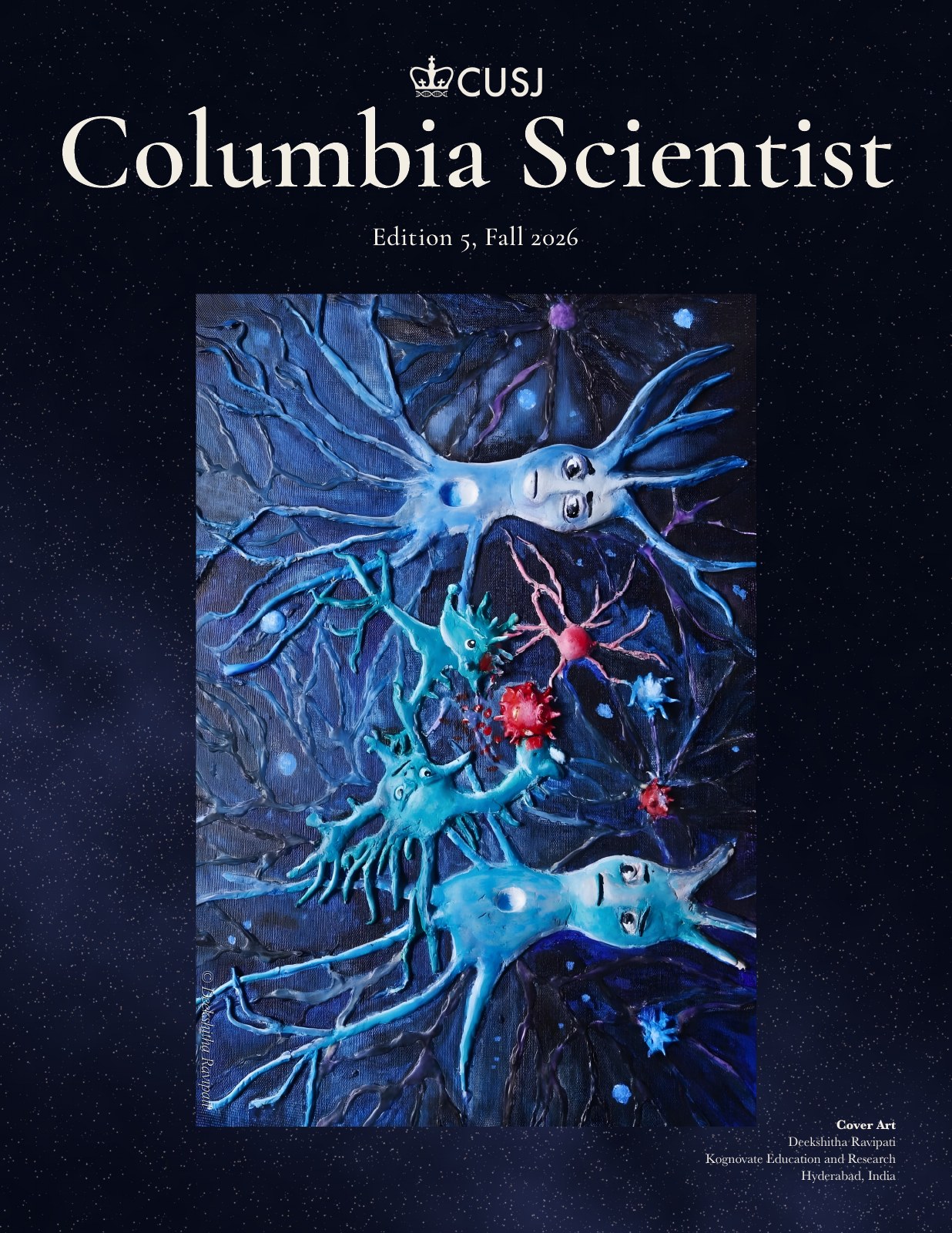
Table of contents
- 8Triumphs and Ethical Concerns of Animal De-ExtinctionBioethics
- 10Depression Between the Electrodes: Why AI Misreads the Brain's Broken NetworkNeuroscience
- 13The Immunotherapy LotteryBiotechnology
- 16The Human HeartCardiology
- 17Organ-on-a-Chip: No, it’s Not a SnackBiotechnology
- 20Why Our Picture of Parkinson’s Is WrongNeuroscience
- 22Brains in a Dish: The Looming Concerns of Brain OrganoidsBioethics
- 24LFP batteries: The Chemistry That Waited for the Right TimeEnergy
- 27The Infrastructure of Survival: Integrating High-Performance Computing and SIR Frameworks into Global Health PolicyEpidemiology
- 30From Scene to Synapse: Rethinking Film Education with NeurocinematicsNeuroscience
- 32Neuronanomedicine and the Future of Central Nervous System-Related DisordersMedicine
- 35Same Drug, Different OutcomeOncology
- 36Microglia: Weaving the Link Between Hypertension and Alzheimer’sNeuroscience
- 39From Ayurveda to Instagram: The Hype and Hope of AshwagandhaMedicine
All work in this edition is published under a Creative Commons Attribution 4.0 International licence. Copyright is retained by the authors.