Science Art
Same Drug, Different Outcome
How your gut microbiome shapes response to cancer therapy: the same drug shrinks one patient’s tumor and fails in another’s.
- Published in
- Edition 5, Fall 2026
- Pages
- 35
- Licence
- CC BY 4.0
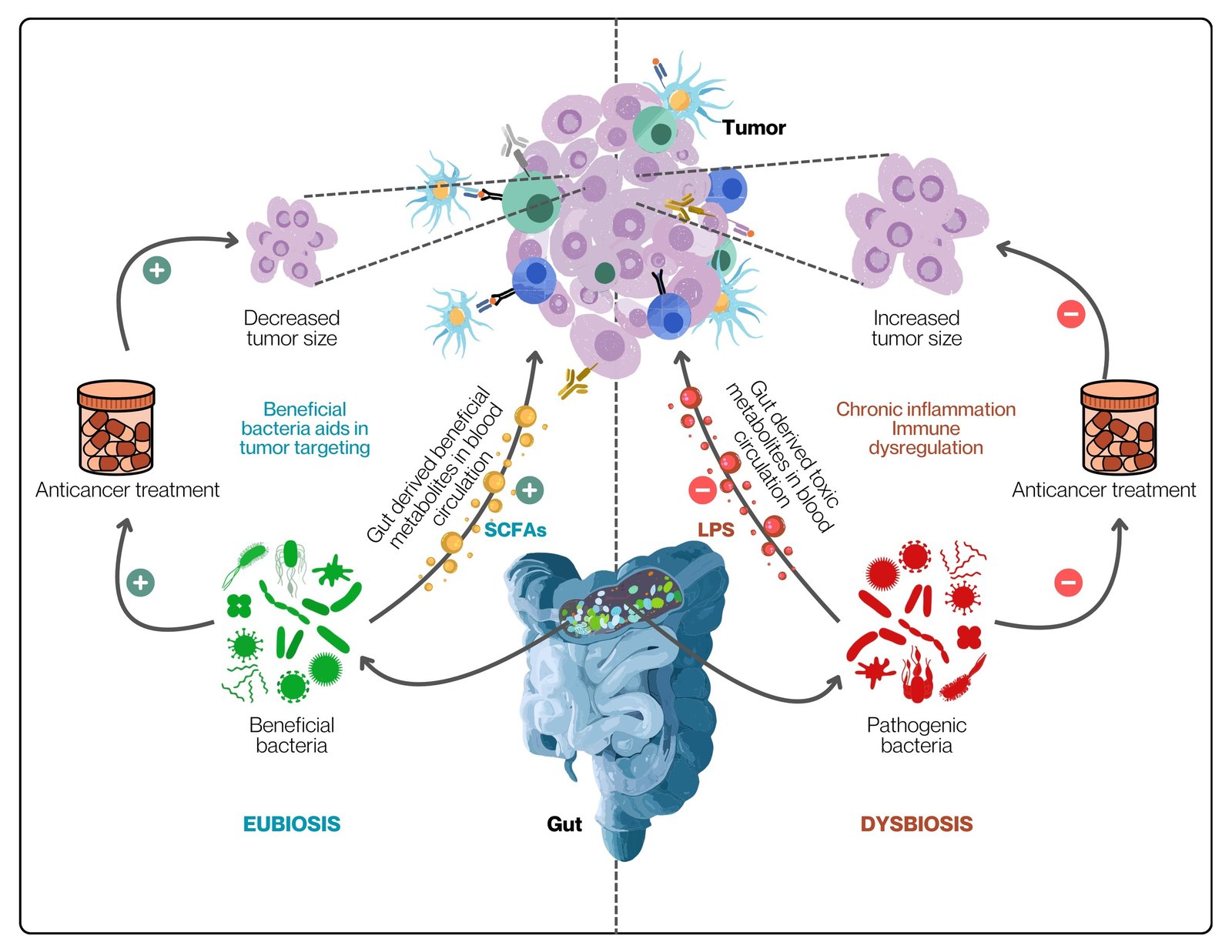
This illustration shows how differences in the gut microbiome may influence patients’ responses differently to the same anticancer drug. In patients with eubiosis, beneficial bacteria produce metabolites such as short-chain fatty acids (SCFAs) which help maintain the gut barrier integrity, reduce systemic inflammation, and enhance antitumor immunity through dendritic cell priming and CD8⁺ T-cell function. This creates an immune-responsive tumor environment, improving treatment effectiveness and promoting tumor shrinkage. In patients with dysbiosis, pathogenic microbes increase inflammatory signals like Lipopolysaccharides (LPS) which can activate TLR4-NF-κB signalling and drive chronic inflammation, immune dysfunction, and therapy resistance, allowing tumors to persist or grow despite therapy.
How to cite this article
Sandhyala, A. (2026). Same Drug, Different Outcome. Columbia Scientist, 5, 35. https://columbiascientist.org/articles/same-drug-different-outcome
© 2026 Akshay Sandhyala. This is an open-access article distributed under the terms of the Creative Commons Attribution 4.0 International licence, which permits use, distribution, and reproduction in any medium, provided the original author and source are credited.