Chemistry
What Makes Up Your Makeup
Women account for 62% of global skincare spending but only 43% of the cosmetic chemists who formulate the products, and they earn about $2,000 less a year for the same work.
- Published
- August 18, 2026
- Licence
- CC BY 4.0
Examining the container of any arbitrary beauty or skincare product, you’re bound to find a largely unintelligible list of ingredients plastered on the back. Yet for most, not nearly as much attention is paid to the chemical composition of the product they are buying as, say, the brand or price tag. A third of all American skincare buyers actively disregard the ingredients in the products they use on a daily basis (Miranda, 2023). Yet it’s not like the tubes of makeup and bottles of lotion lining convenience store shelves simply materialize into existence. This massive market of cosmetics and personal care is upheld behind the scenes by product developers, experimenters, and testers broadly known as cosmetic chemists. Cosmetic chemistry, in a similar fashion to other professional careers in the sciences, requires substantive education not only in chemistry itself but also biology, physics, and medicine (Hollywood Institute, 2026). But despite the fact that the work done by cosmetic chemists most often ends up in the hands of women, the work itself may ironically not even be performed by women at all.
Beauty and skincare make up one of the largest and most profitable global industries, with the global skincare market having generated approximately 131.2 billion USD in global revenue in 2022. Interestingly, over 62.2% of revenue generated by the skincare industry came from purchases made by women (Deb, 2026). While it is not particularly surprising that primarily women would indulge in buying personal care products it raises questions of the origins of such products, and whether they are properly developed for the demographic that favors them.
In 2020, around 57% of cosmetic chemists were reported to be male while the remaining 43% were reported to be women. In addition, male cosmetic chemists earned around $2,000 more annually for performing the same profession, as seen in Figure 1 (Zippia, 2025).
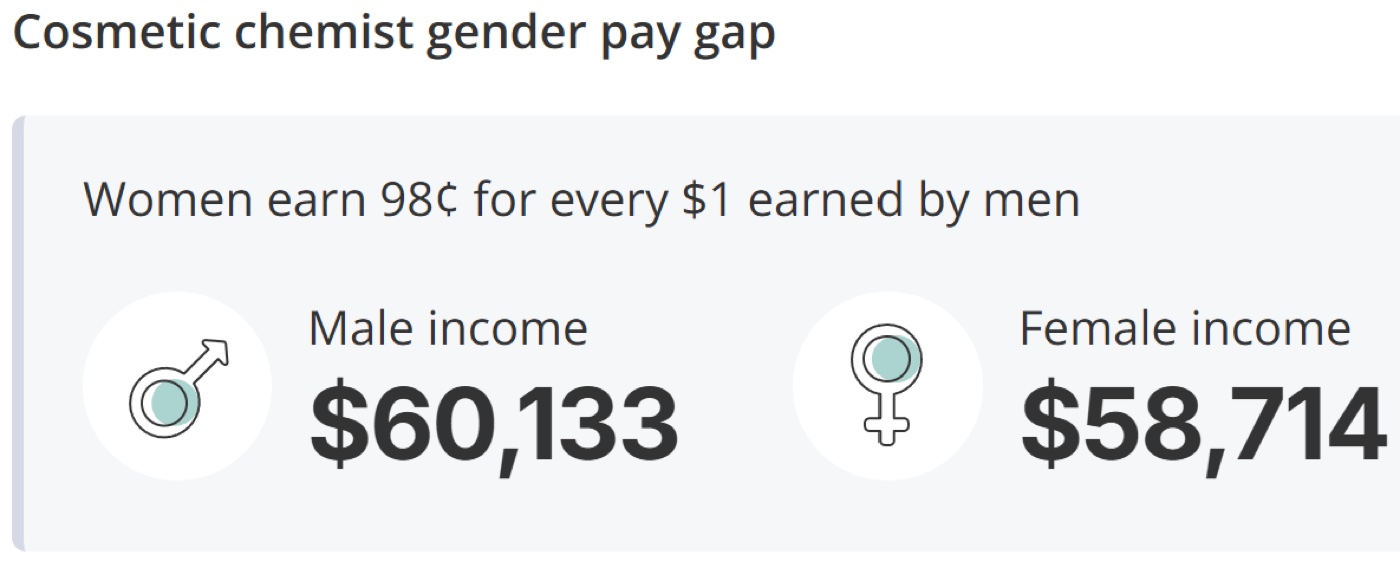
Figure 1. Income comparison between male and female cosmetic chemists (Zippia, 2025)
While on paper, these numbers may seem minor, they are representative of a much larger fundamental issue with the cosmetic chemistry field. It is ironic for men to compose a larger percentage of crafting products they typically do not even end up buying and using, and get paid more for doing so.
In fact, The Society of Cosmetic Chemists (SCC), typically recognized for cementing cosmetic chemistry as a scientific field of study with its founding in 1945, only elected its first female president in 1961 (Society of Cosmetic Chemists, 2026). The single most dominant professional hub for cosmetics development operated under only male leadership for 16 years of its existence, despite rolling out products targeted towards the female gender.
In truth, there would be no issue with men partaking in the production of beauty products if they did so with consideration of their industry’s audience and women’s needs. Women are absolutely not the only consumers of personal care products, but a market dominated by women on the receiving end deserves to be dominated by women on the distribution end as well.
To worsen matters, women did not truly choose to be at the receiving end of this market—for millions of women globally, they were forced into the position. Our society places extreme pressure on young, impressionable girls to indulge in makeup for the sake of conforming to unrealistic modern beauty standards. Young boys are held to practically no comparable standards in terms of their physical appearance. And yet, chemical-based cosmetics can lead to a significantly higher risk of respiratory conditions, neurological disorders, endocrine disruption, and chronic diseases such as cancer for its users. For example, phthalates, a class of chemicals often found in fragrances and nail polish, can mimic estrogen and other hormones in the body (Figure 2). Contact with these chemicals through beauty products has been associated with issues in development and reproduction, specifically for the female gender (Alnuqaydan, 2024).
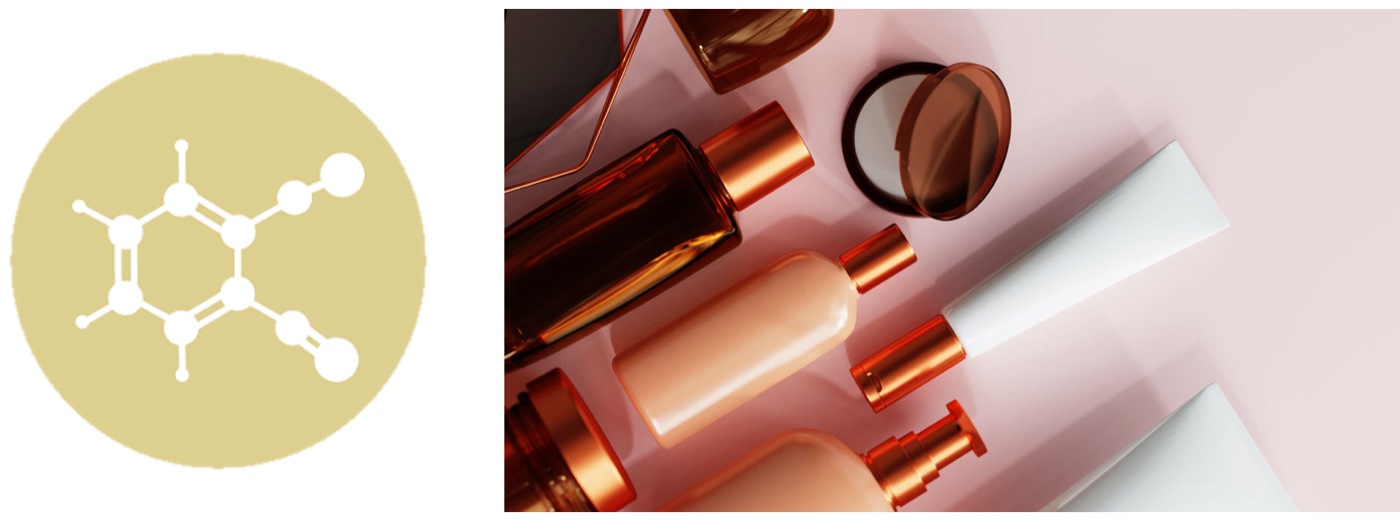
Figure 2. Phthalates is found in numerous types of beauty products
Thus, women and young girls feel external pressure to put their long-term health at risk for the sake of achieving the prime physical state that patriarchal society has normalized, encouraged, and practically enforced. And at the very end of it, they do not even get to populate the field producing the products they have been conditioned into using.
Cosmetic chemistry is ultimately the “magic” behind one of the absolute largest modern industries, and yet the work of such chemists typically flies under the radar. As a result, the gender disparity in this field also goes almost entirely overlooked, a gender disparity completely unacceptable for supporting a market that is so heavily reliant on women themselves.
References
- “About SCC.” Society of Cosmetic Chemists, 2026, https://www.scconline.org/About/About-SCC.
- Alnuqaydan, Abdullah M. “The dark side of beauty: an in-depth analysis of the health hazards and toxicological impact of synthetic cosmetics and personal care products.” Frontiers in public health vol. 12. 26 Aug. 2024, doi:10.3389/fpubh.2024.1439027.
- “Cosmetic chemist demographics and statistics in the US.” Zippia, Inc., Jan. 8, 2025, https://www.zippia.com/cosmetic-chemist-jobs/demographics/.
- Deb, Trishita. “Skincare Statistics By Gender, Concerns, Conditions (2026).” Market.us Media, Jan. 30, 2026, https://media.market.us/skincare-statistics/.
- Miranda, Lucio. “The American cosmetics market.” ExportUSA, Aug. 8, 2023, https://www.exportusa.eu/us-cosmetics-export.php.
- “The Science of Beauty: Understanding Cosmetic Chemistry.” Hollywood Institute, Hollywood Institute of Beauty Careers, 2026, https://www.hi.edu/blog/the-science-of-beauty-understanding-cosmetic-chemistry/.
How to cite this article
Wang, A. (2026). What Makes Up Your Makeup. Columbia Scientist, Summer Publishing Program. https://columbiascientist.org/articles/gender-gap-cosmetic-chemistry
© 2026 Audrey Wang. This is an open-access article distributed under the terms of the Creative Commons Attribution 4.0 International licence, which permits use, distribution, and reproduction in any medium, provided the original author and source are credited.