Disease
Why Is There Still No Perfect Dengue Vaccine?
Dengue had over 14 million reported cases in 2024 and no universal vaccine. Antibodies from one serotype can escort another into your cells, so vaccine design has moved to the molecular level.
- Published
- August 18, 2026
- Licence
- CC BY 4.0
Dengue, endemic in tropical and subtropical regions, is one of the most dangerous mosquito-borne diseases globally, with over 14 million reported cases and 10,000 deaths worldwide in 2024 alone. (He et al., 2026). Every time you’re bitten by an Aedes mosquito, characterized by its distinctive black and white markings, the dengue virus slips into your circulatory system and takes over your cells, triggering fever and immune responses as it replicates rapidly. However, there is not much one could do to protect themself against this deadly virus. There is still no universal vaccine, primarily due to the structure of the mosquito-borne virus itself. Vaccines usually provide protection by imitating an infection. Structures on the vaccine called antigens cause white blood cells to produce proteins called antibodies that neutralize the virus when it is detected in the bloodstream during an infection. DENV, the virus that causes dengue fever, consists of four antigenically distinct serotypes, meaning four different versions of the same virus that our immune system cannot fully recognize as related. Thus, infection with one doesn’t provide protection against the other three as the immune system cannot recognize them. Additionally, second-time infection with another serotype is shown to have increased risks (Shih et al., 2024), making the traditional antibody producing vaccination strategies ineffective. This raises the question: will a “perfect” dengue vaccine ever come to exist?
When someone gets vaccinated for Dengue, their immune system is meant to produce antibodies that neutralize all four serotypes, but the response is generally very skewed. Typically, antibodies against one or two serotypes tend to dominate. The other weaker antibodies don’t have the ability to neutralize the other serotypes, yet will still bind to them. Immune cells that normally destroy anything coated in antibodies instead take in these antibody-virus pairs through a docking site called the Fc receptor. The virus then uses this receptor as an entry route into the immune cell to replicate even more efficiently. This is called antibody-dependent enhancement and is the biggest challenge faced by scientists in constructing a universal dengue vaccine. In someone who has never been infected before, the latter group of antibodies can prove to be fatal through this mechanism. This is the major reason why Dengvaxia, the first licensed dengue vaccine, offered poor protection against DENV-2 and raised hospitalization risk in children under nine who had never been infected before (He et al., 2026).
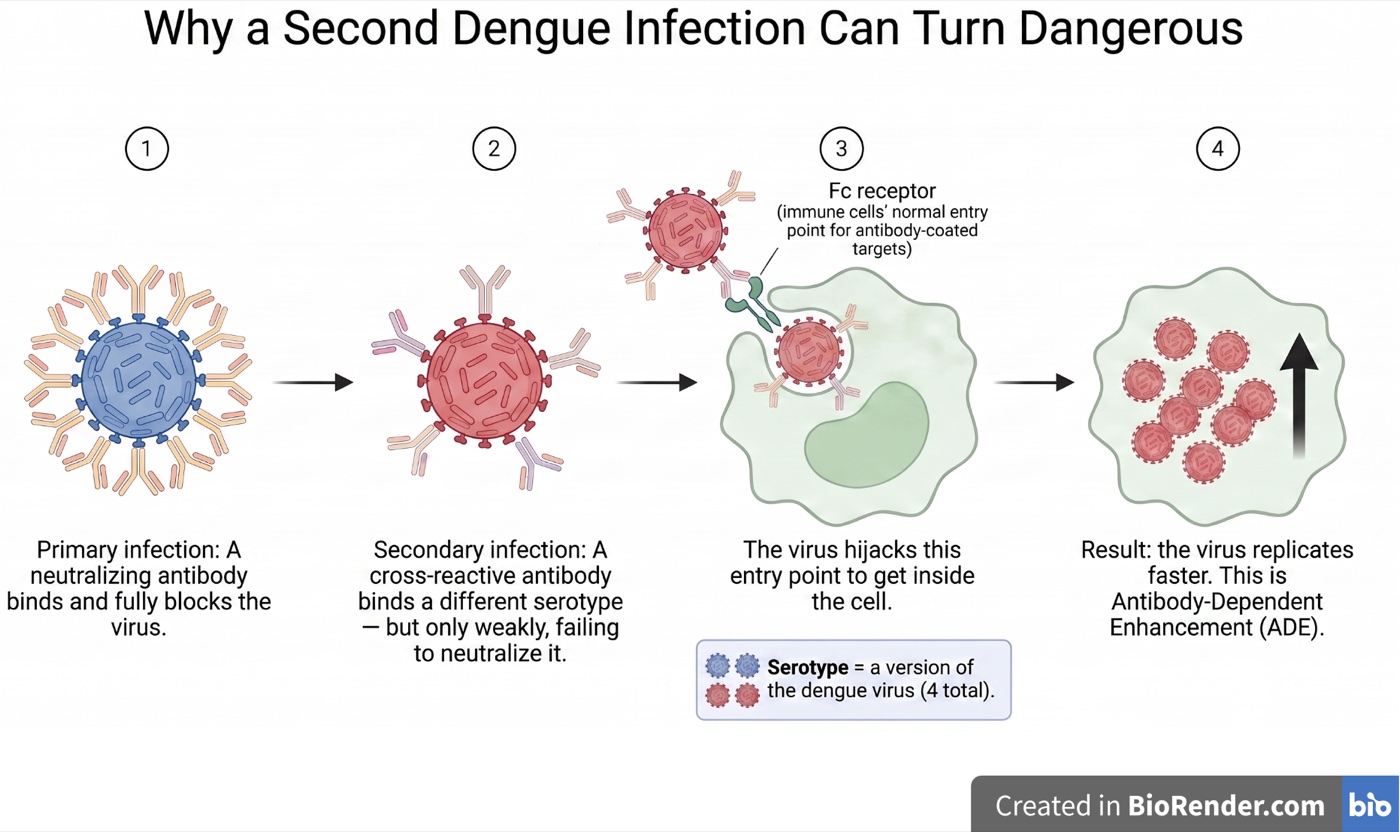
Figure 1. Antibody-dependant enhancement (ADE) during secondary dengue infection.
Other vaccine candidates ended up facing similar problems, hitting the same wall from a different angle. TAK-003, the second licensed vaccine, tried to fix this skewness with a shared DENV-2 backbone, while also carrying envelope genes from the other three serotypes. Over 4.5 years, it showed 61.2% efficacy against confirmed dengue and 84.1% against hospitalization. However, protection still isn’t evenly distributed among the stereotypes, ranging from 80.4% against DENV-2 down to just 52.3% against DENV-3 (Tricou et al., 2024). Butantan-DV showed 79.6% efficacy over two years regardless of prior exposure, but only against DENV-1 and DENV-2, since DENV-3 and DENV-4 weren’t circulating during its trial (Kallás et al., 2024). TV005 produced durable responses against all four serotypes in Bangladesh, though antibody levels dropped off faster in children aged one to four (Walsh et al., 2024). Every vaccine ends up hitting the same wall from a different angle.
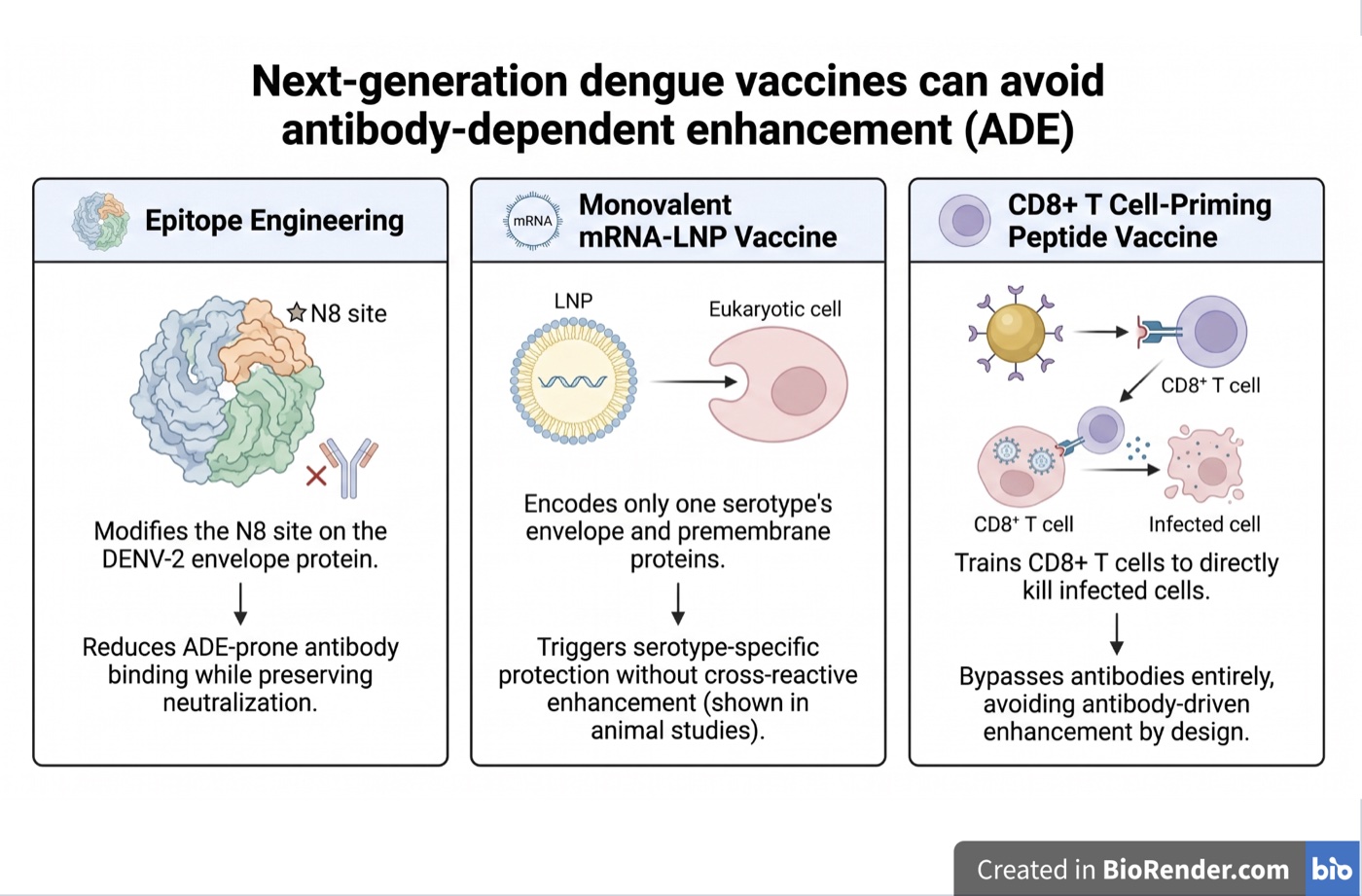
Figure 2. Three next-generation strategies for avoiding antibody-dependant enhancement (ADE) in dengue vaccines.
Scientists are now deviating from the traditional antibody-virus pathway, instead trying to find solutions at the molecular level to counter the problems associated with antibody-dependent enhancement. To begin, they have been able to tweak a single problematic site on the DENV-2 envelope protein, called N8, using mRNA vaccines, which reduce the risk of antibodies helping the virus infect cells, while strengthening neutralization. In a separate line of research, rather than modifying a shared epitope, a mRNA-LNP vaccine encoding the full prM (premembrane, a structural protein required for proper viral assembly) and envelope proteins of a single serotype, DENV 2 in their case, triggered serotype-specific protection with reduced antibody-dependant enhancement in animal studies (Wollner et al., 2021). Finally, other researchers have shifted their focus from mRNA vaccines, and are now using a gold nanoparticle-peptide vaccine which trains CD8+ T cells to kill infected cells directly, attacking the problem more directly (Miauton et al., 2024).
While the way dengue virus spreads is very simple, the underlying mechanisms remain immensely complicated. The presence of four serotypes which demand a precisely balanced immune response, makes engineering a vaccine immensely difficult. The most promising progress now comes from researchers who have stopped treating dengue as a one antigenic target and have instead been looking to engineer ways to counteract the enhancement mechanisms associated with the virus. As it stands, a “perfect” Dengue vaccine simply remains a thought for the distant future.
References
- He, S., Fan, D., Guo, Y., Guan, Y., Sheng, Z., Gao, N., & An, J. (2026). Current status of dengue fever epidemics and vaccine development. Virologica Sinica, 41(1), 1–9. https://doi.org/10.1016/j.virs.2026.01.001
- Shih, H.-I., Wang, Y.-C., Wang, Y.-P., Chi, C.-Y., & Chien, Y.-W. (2024). Risk of severe dengue during secondary infection: A population-based cohort study in Taiwan. Journal of Microbiology, Immunology and Infection, 57(5), 730–738. https://doi.org/10.1016/j.jmii.2024.07.004
- Tricou, V., Yu, D., Reynales, H., Biswal, S., Saez-Llorens, X., Sirivichayakul, C., Lopez, P., et al. (2024). Long-term efficacy and safety of a tetravalent dengue vaccine (TAK-003): 4·5-year results from a phase 3, randomised, double-blind, placebo-controlled trial. The Lancet Global Health, 12(2), e257–e270. https://doi.org/10.1016/S2214-109X(23)00522-3
- Kallás, E. G., Cintra, M. A. T., Moreira, J. A., Patiño, E. G., Braga, P. E., Tenório, J. C. V., Infante, V., et al. (2024). Live, attenuated, tetravalent Butantan–dengue vaccine in children and adults. New England Journal of Medicine, 390(5), 397–408. https://doi.org/10.1056/NEJMoa2301790
- Walsh, M. R., Alam, M. S., Pierce, K. K., Carmolli, M., Alam, M., Dickson, D. M., Bak, D. M., Afreen, S., Nazib, F., Golam, K., Qadri, F., Diehl, S. A., Durbin, A. P., Whitehead, S. S., Haque, R., & Kirkpatrick, B. D. (2024). Safety and durable immunogenicity of the TV005 tetravalent dengue vaccine, across serotypes and age groups, in dengue-endemic Bangladesh: A randomised, controlled trial. The Lancet Infectious Diseases, 24(2), 150–160. https://doi.org/10.1016/S1473-3099(23)00520-0
- Wollner, C. J., Richner, M., Hassert, M. A., Pinto, A. K., Brien, J. D., & Richner, J. M. (2021). A dengue virus serotype 1 mRNA-LNP vaccine elicits protective immune responses. Journal of Virology, 95(24), e02482-20. https://doi.org/10.1128/JVI.02482-20
- Miauton, A., Audran, R., Besson, J., Maby-El Hajjami, H., Karlen, M., Warpelin-Decrausaz, L., Sene, L., Schaufelberger, S., Faivre, V., Faouzi, M., Hartley, M.-A., Spertini, F., & Genton, B. (2024). Safety and immunogenicity of a synthetic nanoparticle-based, T cell priming peptide vaccine against dengue in healthy adults in Switzerland: A double-blind, randomized, vehicle-controlled, phase 1 study. EBioMedicine, 99, Article 104922. https://doi.org/10.1016/j.ebiom.2023.104922
How to cite this article
Anwar, R. N. (2026). Why Is There Still No Perfect Dengue Vaccine?. Columbia Scientist, Summer Publishing Program. https://columbiascientist.org/articles/why-no-perfect-dengue-vaccine
© 2026 Ryem Nabi Anwar. This is an open-access article distributed under the terms of the Creative Commons Attribution 4.0 International licence, which permits use, distribution, and reproduction in any medium, provided the original author and source are credited.