Environment
Nurdles
Eleven and a half trillion plastic pellets enter the ocean every year. They aren’t classified as hazardous, so almost nobody is counting them.
- Published in
- Edition 4, Fall 2025
- Pages
- 35–36
- Licence
- CC BY 4.0
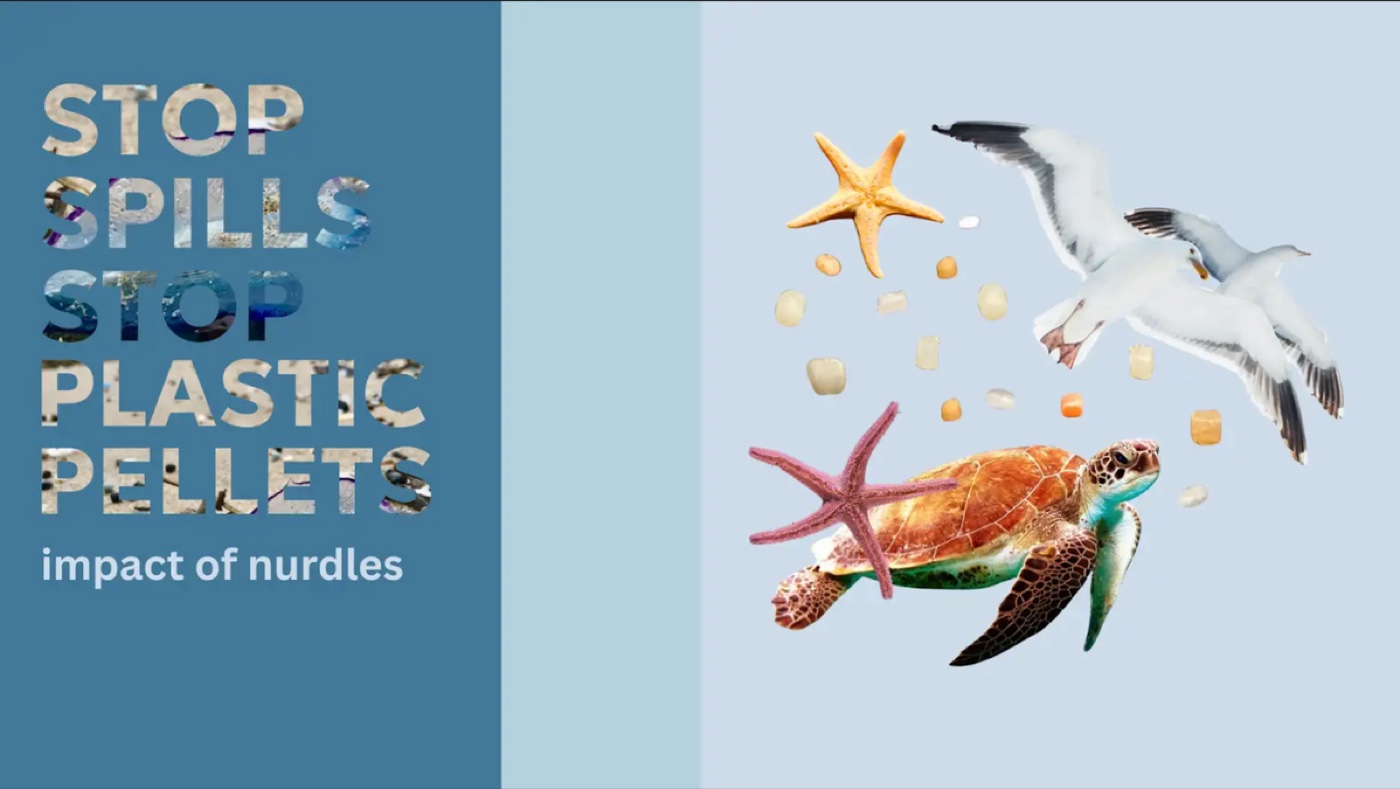
Nurdles are tiny (3-5 mm) plastic pellets that serve as the building blocks of plastic products, posing a significant threat to ocean life and animals. They are made from fossil fuels and contain harmful chemicals, including phthalates, Bisphenol A, Flame retardants, Organotins, Heavy metals, and perfluoroalkyl and polyfluoroalkyl substances. The chemical makeup of nurdles produces bacterial hosting capabilities, creating a plastisphere’ camp that can act as a reservoir for fecal and pathogenic bacteria.
Nurdles go through a global plastic supply chain during the transportation of supplies, and nurdles often get leaked into the ocean due to their small size. Plastic pellets can be released at any stage of the plastic pellet supply chain including during production or transportation. The nurdles can spread via wind, currents, and tides, ultimately ending up in nearby habitats and ecosystems, both on land and in the sea. These spills are disastrous and hard to clean up, oftentimes diverting to different places. Once spilled, these nurdles can trickle through sewers, storm drains, and the ocean, leading to detrimental and disastrous problems.
Nurdles can be found in communities, protected areas, fisheries, and even in remote regions. Nurdles’ impact is not just limited to communities, it poses one of the most serious threats to marine life, harming everything from seals, seabirds, fish, and many more. Furthermore, over 220 marine species have ingested plastic debris including puffins, turtles, urchins, fish, and more. Once digested, these nurdles remain in the stomachs of wildlife, leading to malnutrition and oftentimes starvation.
One of the largest nurdle spills in history took place on Sri Lanka’s coast in 2021. During the incident, the X-Press Pearl unleashed a record 1,680 metric tons and 70 billion 5 mm plastic pellets. The plastic engulfed the beach to the point that the sand could not be seen. Images of nurdles stuck in fish mouths and gills raised public concerns about the safety of eating seafood while also affecting the fisheries, which are a major source of income for Sri Lanka. Fishermen who were already having difficulty making ends meet because of COVID-19 containment measures saw a significant decline in their income as a result of the ship catastrophe.
It is not feasible to remove every pellet from the marine and coastal environment once it has been spilled. To ensure that nurdles are packaged, stored, and transported with utmost care, steps must be taken both domestically and internationally to prevent plastic pellet pollution at its source through effective laws and regulations. Currently, due to a lack of industry transparency and reporting, nurdle spills are unrecorded because they are not classified as “hazardous” materials. There are no IMO rules regulating plastic pellets and spills across the ocean, despite their detrimental impact on the ocean and environment. As a result, there is little to no research on nurdles or its prevention. The gap between scientific evidence and social awareness of this issue remains inadequately addressed.
Research must be conducted on this topic, as well as on plastic pollution and its impacts on the ocean. Individuals can prevent nurdles spills by spreading awareness, supporting policy legislation, or identifying nurdles on local beaches. There are a couple of policy legislation citizens can support including the UN Global Plastics Treaty and the Plastic Pellet Free Waters Act. Simple mandates to regulate and enforce stricter precautions can help remove the 11.5 trillion plastic pellets that end up in the ocean every year. It’s this vital, yet overlooked, scientific evidence that must be brought up in topics of current interest and government policies.
How to cite this article
Deng, B. (2025). Nurdles. Columbia Scientist, 4, 35–36. https://columbiascientist.org/articles/nurdles
© 2025 Bernice Deng. This is an open-access article distributed under the terms of the Creative Commons Attribution 4.0 International licence, which permits use, distribution, and reproduction in any medium, provided the original author and source are credited.