Medicine
Microbial Medicine: Treating Inflammatory Skin Diseases
Trillions of microbes live on human skin, and the balance among them decides whether the barrier holds. What happens when medicine starts treating that ecosystem directly?
- Published in
- Edition 4, Fall 2025
- Pages
- 26–28
- Licence
- CC BY 4.0
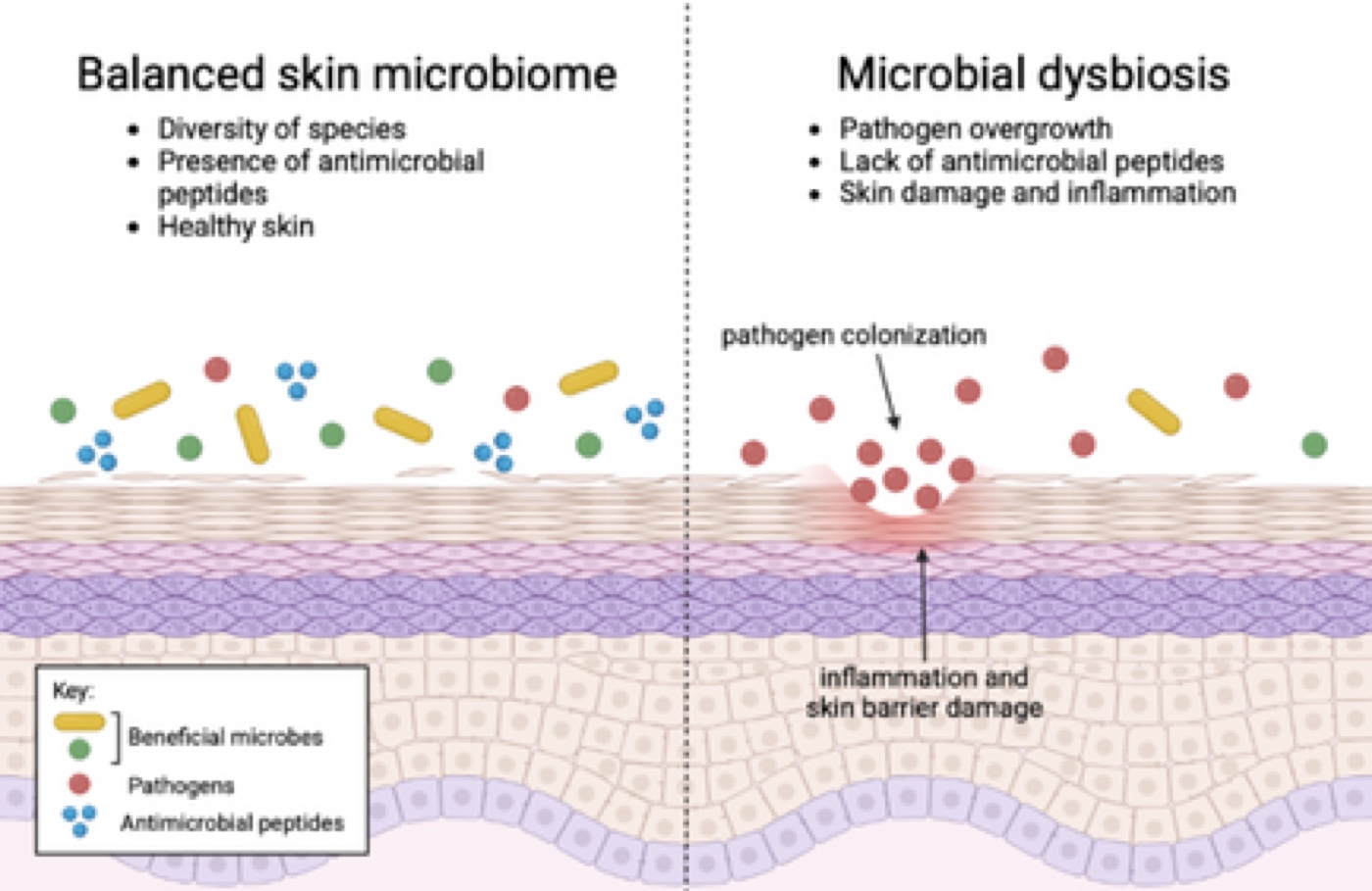
The skin is home to a diverse ecosystem consisting of trillions of bacterial, fungal, and viral species. These microorganisms collectively make up the skin microbiome, which plays key roles in maintaining homeostasis and defending against pathogens on the skin. Maintaining a diverse and balanced skin microbiome is essential for a healthy skin barrier, as disruptions in this balance, known as dysbiosis, can lead to loss of beneficial microbes, proliferation of pathogenic microbes, and ultimately, the development of chronic skin diseases.
Various beneficial microbes residing on the skin are crucial to protecting against disease by competing with harmful microbes for the limited nutrients on the skin and by producing antimicrobial peptides, which are bioactive compounds that disrupt the cell membranes of pathogens. For example, Staphylococcus epidermidis and Staphylococcus hominis secrete antimicrobial peptides that inhibit the growth of Staphylococcus aureus, a common skin pathogen associated with inflammation in the skin (Glatthardt et al., 2024). Microbial dysbiosis, often induced by aging processes, environmental influences, cosmetic products, and the application of topical medications that alter the microbiome composition, can lead to a loss of beneficial
Figure 1: Comparison between balanced and dysbiotic skin microbiome.
Therapeutic Strategies for Microbiome Modulation
Microbiome modulation through bacteriotherapy is currently being explored for its potential in the treatment of common skin diseases. Bacteriotherapy can be administered through various methods: microbiome transplantation, probiotics, prebiotics, and postbiotics. In skin microbiome transplantations, an entire microbial community from a healthy individual is collected and transferred directly to the disinfected skin of a patient with a skin disease, introducing a diverse and well-balanced microbiome to potentially restore skin barrier function. Probiotics are live beneficial microbes, such as S. epidermidis or Lactobacilli, that provide health benefits. Postbiotics are the bioactive products produced by probiotics, which can help improve skin barrier function and immune regulation. Both probiotics and postbiotics can be administered either topically or orally. Prebiotics are contained in food and serve as nutrients for probiotics (Nezhadi et al., 2024).
These methods for manipulating the skin microbiome have proven to be promising alternatives to conventional purified chemical compounds, such as corticosteroids or topical creams, in management of skin disease. Once successfully colonized, live microbes can persist for a lifetime, providing lasting effects while reducing the need for repeated application (Ito & Amagai, 2022). Although research is still in its early stages, bacteriotherapy has demonstrated successful applications in human health interventions in recent studies. Bacterial transplants of commensal Staphylococcus species have shown therapeutic activity against atopic dermatitis through the inhibition of S. aureus growth (Nakatsuji et al., 2021). Additionally, the application of live Lactobacilli, which are known to have antiinflammatory effects and promote restoration of the skin barrier, resulted in reduced abundance of pathogenic Staphylococcus and Cutibacterium acnes strains on the skin. This contributed to a reduction of inflammatory acne lesions (Lebeer et al., 2022). In a study involving psoriasis patients, treatments with certain probiotic species of Bacillus improved psoriasis conditions and reduced skin inflammation (Buhaș et al., 2023).
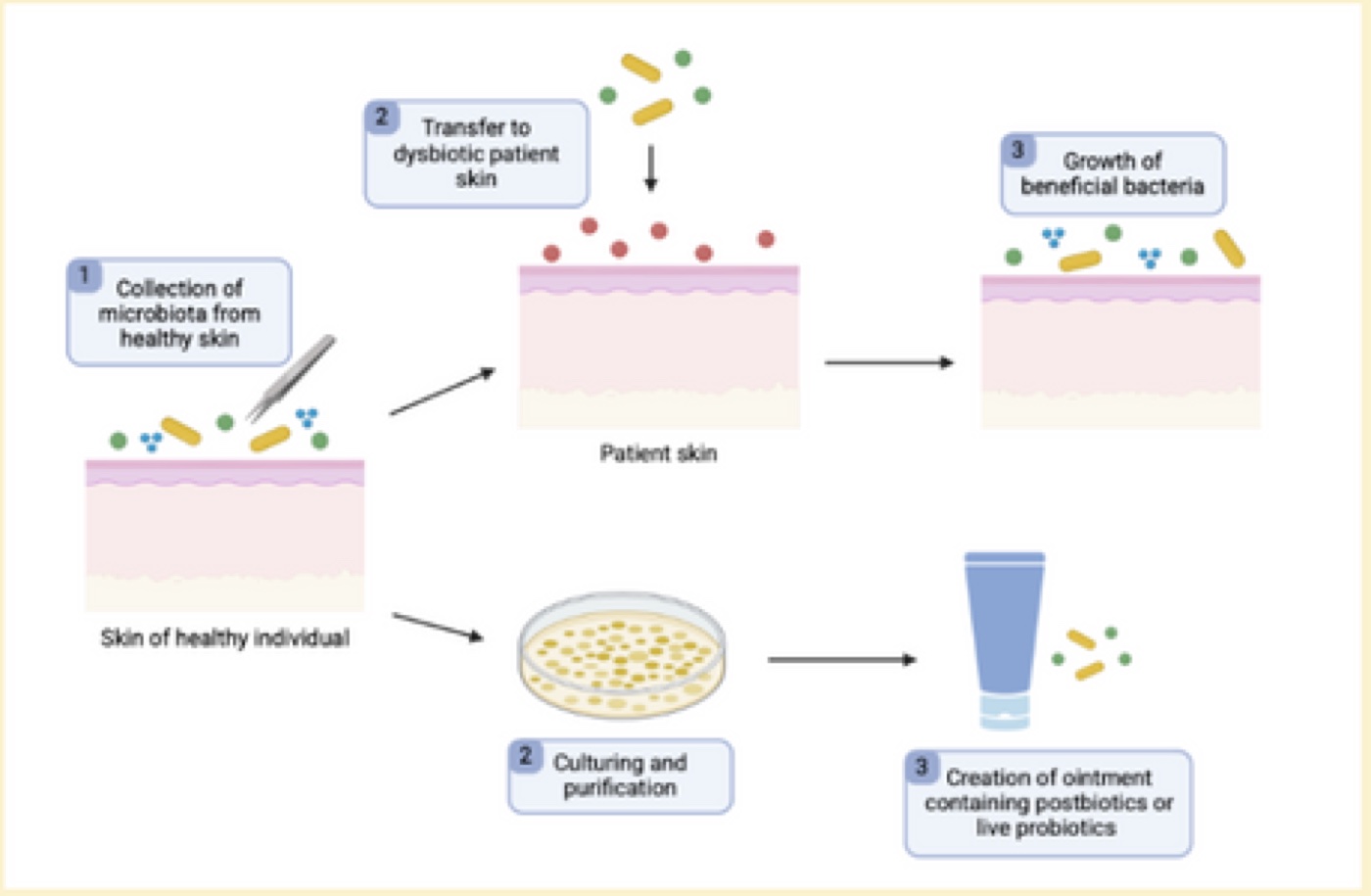
Figure 2: Skin microbiome modulation strategies through transplantations and bacteriotherapy.
Limitations and Implications
However, these therapies also come with limitations. During microbiome transplantation, it is difficult to identify which specific microbes are being transferred, creating the possibility of pathogenic taxa being transplanted. Although these opportunistic pathogens may not have been the source for initial disease in the donor, the recipient individual’s skin may react poorly due to a weakened skin barrier (Callewaert et al., 2021). Additionally, with the microbial transplants and probiotic application, it may be difficult for newly transplanted microbes to persist and colonize on the skin at first due to potential differences in skin microenvironments between the donor and recipient, as well as immune responses in the recipient (Ito & Amagai, 2022). In the case of prebiotics and postbiotics, the effects of these compounds can be unpredictable. Prebiotics may unintentionally feed and stimulate the growth of non-targeted bacteria, leading to further imbalances in the microbiome, and postbiotics may trigger immune reactions or irritation in sensitive skin (Nezhadi et al., 2024).
Despite these limitations, microbiome manipulation therapies still represent a novel approach in restoring skin health. Research is still in its infancy, and further experiments are being conducted to refine these therapies and improve their safety and efficacy. With over one-third of the global population affected by skin diseases, it is important to explore alternatives like microbiome modulation that can support longterm skin barrier health while reducing reliance on conventional treatments that are often associated with systemic side effects and high withdrawal rates (Li et al., 2024). As the scientific understanding of the skin microbiome continues to grow, bacteriotherapy may become a widespread option for patients struggling with chronic inflammatory skin diseases.
References
Boxberger, M., Cenizo, V., Cassir, N., & La Scola, B. (2021). Challenges in exploring and manipulating the human skin microbiome. Microbiome, 9(1), 125. https://doi.org/10.1186/s40168-021-01062-5
Buhaș, M. C., Candrea, R., Gavrilaș, L. I., Miere, D., Tătaru, A., Boca, A., & Cătinean, A. (2023). Transforming Psoriasis Care: Probiotics and Prebiotics as Novel Therapeutic Approaches. International Journal of Molecular Sciences, 24(13), 11225. https://doi.org/10.3390/ijms241311225
Callewaert, C., Knödlseder, N., Karoglan, A., Güell, M., & Paetzold, B. (2021). Skin microbiome transplantation and manipulation: Current state of the art. Computational and Structural Biotechnology Journal, 19, 624-631. https://doi.org/10.1016/j.csbj.2021.01.001
Glatthardt, T., Lima, R. D., de Mattos, R. M., & Ferreira, R. B. R. (2024). Microbe Interactions within the Skin Microbiome. Antibiotics (Basel, Switzerland), 13(1), 49. https://doi.org/10.3390/antibiotics13010049
Ito, Y., & Amagai, M. (2022). Controlling skin microbiome as a new bacteriotherapy for inflammatory skin diseases. Inflammation and Regeneration, 42(1), 26. https://doi.org/10.1186/s41232-022-00212-y
Lebeer, S., Oerlemans, E. F. M., Claes, I., Henkens, T., Delanghe, L., Wuyts, S., Spacova, I., van den Broek, M. F. L., Tuyaerts, I., Wittouck, S., De Boeck, I., Allonsius, C. N., Kiekens, F., & Lambert, J. (2022). Selective targeting of skin pathobionts and inflammation with topically applied lactobacilli. Cell Reports Medicine, 3(2), 100521. https://doi.org/10.1016/j.xcrm.2022.100521
Li, Q., Patrick, M. T., Sreeskandarajan, S., Kang, J., Kahlenberg, J. M., Gudjonsson, J. E., He, Z., & Tsoi, L. C. (2024). Large-scale epidemiological analysis of common skin diseases to identify shared and unique comorbidities and demographic factors. Frontiers in Immunology, 14, 1309549. https://doi.org/10.3389/fimmu.2023.1309549
Nakatsuji, T., Gallo, R. L., Shafiq, F., Tong, Y., Chun, K., Butcher, A. M., Cheng, J. Y., & Hata, T. R. (2021). Use of Autologous Bacteriotherapy to Treat Staphylococcus aureus in Patients With Atopic Dermatitis: A Randomized Double-blind Clinical Trial. JAMA Dermatology, 157(8), 978-982. https://doi.org/10.1001/jamadermatol.2021.1311
Nezhadi, J., Fadaee, M., Ahmadi, S., & Kafil, H. S. (2024). Microbiota transplantation. Heliyon, 10(20), e39047. https://doi.org/10.1016/j.heliyon.2024.e39047
How to cite this article
Li, G. (2025). Microbial Medicine: Treating Inflammatory Skin Diseases. Columbia Scientist, 4, 26–28. https://columbiascientist.org/articles/microbial-medicine
© 2025 Grace Li. This is an open-access article distributed under the terms of the Creative Commons Attribution 4.0 International licence, which permits use, distribution, and reproduction in any medium, provided the original author and source are credited.