Medicine
Can Hurting the Body Help the Body?
Botulinum toxin, one of the most lethal substances known, became Botox once someone changed the question. The DLL4-Notch1 pathway heals wounds and feeds tumors; context decides which.
- Published
- August 18, 2026
- Licence
- CC BY 4.0
In 1987, clinical scientists investigated one of the most lethal substances known to science at the time - botulinum toxin. Their end product? A muscle relaxer that could be injected with great precision and little to no toxicity. Botox (Scott, 1980; Whitcup, 2021).
The story of Botox is an insightful and helpful one. What was, in one context, a deadly paralytic agent became, in a different context, a treatment for a wide range of conditions (Whitcup, 2021). It is a testament to the most underrated phenomenon in science: that oftentimes, when we have the freedom to fail, we are allowed to truthfully innovate. Some fields of academia, however, become so absorbed in attempts to follow a path to a solution that they very rarely look at their dead end as a sign to redirect - especially in the case of cancer research.
If the same biological mechanism that promotes healing in one setting can drive destruction in another, recognizing the context dependency may be one of our most underutilized tools in oncological advancement. Such is the case of the DLL4-Notch1 pathway. Notch1 receptors bind to the DLL4 signaling molecule when a wound is created in the tissue. DLL4 can then upregulate gene expression, move existing cells into the wound corridor, or initiate cell replication (Chigurupati et al., 2007; You et al., 2023). Think of this as a dam; Notch1 is always standing by the dam, on standby in case any water starts to leak. If water starts to leak, Notch1 calls on DLL4 to reinforce that dam and keep the water out.
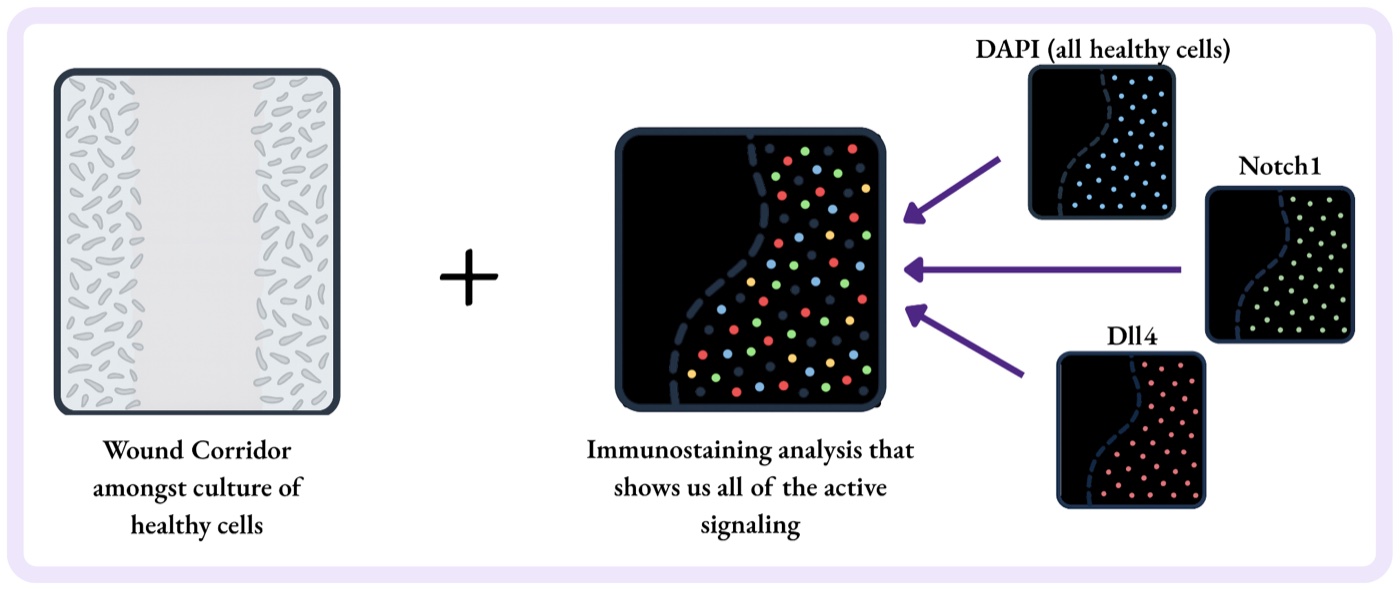
Figure 1. Two analysis and visualization methods showing the cell culture and the cell signaling involved.
In typical physiological conditions, this pathway is a primary participant in the coordinated movement of cells that allows a tissue to close a wound. It’s simple: activate it and cells move together, grow or replicate, and repair (Chigurupati et al., 2007). In the context of wound healing, it is exactly what the body needs.
The thing about cancer, however, is that it doesn’t heal; it causes the body’s cells to proliferate to the point of tumors. In the context of cancer, cells are migrating for their own selfish purposes: invading surrounding tissue, stealing noncancerous cells’ blood supply, and hiding from our immune system (Hanahan, 2022) - but they’re using the same machinery, aren’t they? Because tumor cells also use the DLL4-Notch1 pathway, they can manipulate the body’s preexisting software to repurpose it for growth (You et al., 2023). In the context of cancer, encouraging this pathway is incredibly harmful, and this realization carries a significant implication. Inhibiting DLL4-Notch1 in a wound-healing context would be counterproductive. It would slow the very process responsible for recovery (Chigurupati et al., 2007). But in a tumor, inhibiting that same pathway may be precisely the intervention needed (You et al., 2023). Just as with Botox, perhaps a change in context was needed for the research to be impactful.
Research on HeLa cells - a widely used cervical cancer cell line - supports this reasoning (Landry et al., 2013). In experiments investigating the role of DLL4-Notch1 in tumor cell behavior, inhibition of the pathway produced a measurable reduction in cell growth. HeLa cells, a cancerous cell line, are used as a model for studying cancer proliferation, slowed considerably when the pathway was disrupted. The cells did not stop; they were inhibited - and in oncology, inhibition is often the goal.
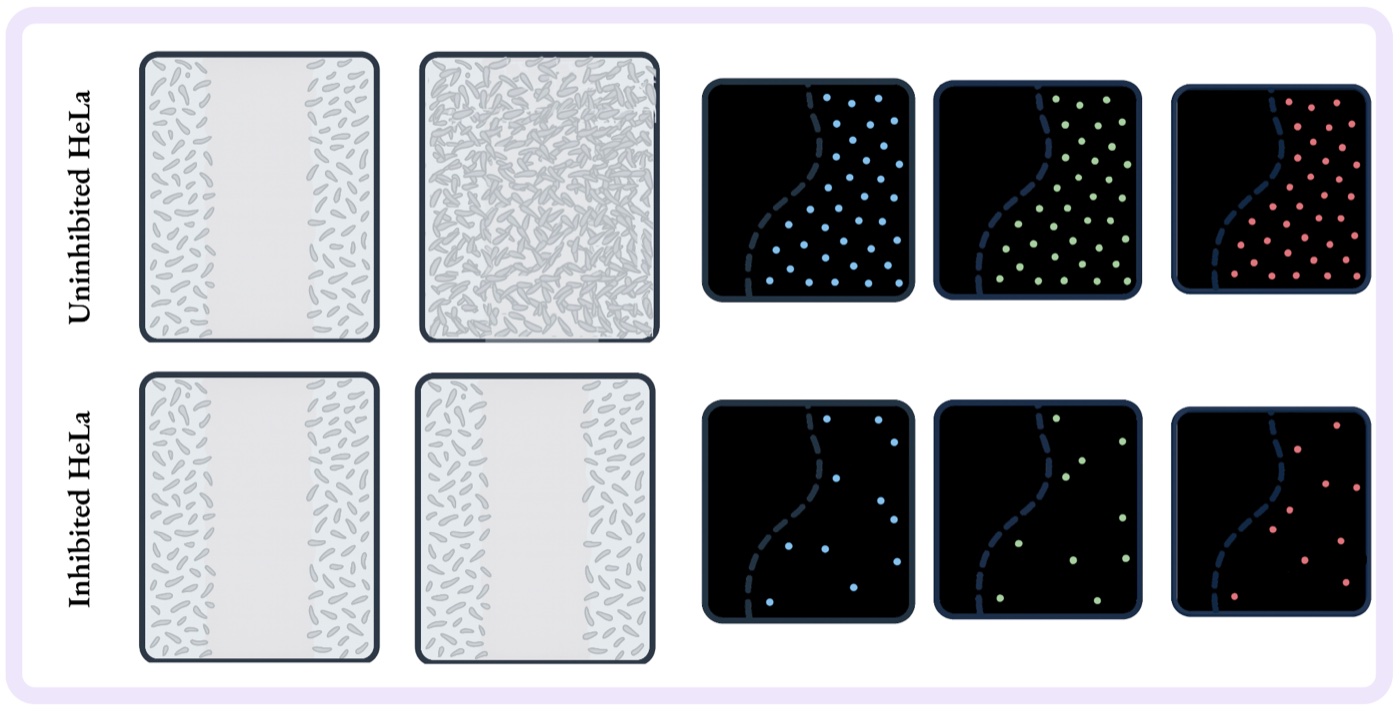
Figure 2. Uninhibited (top) vs Inhibited (bottom) cellular responses.
This is important because oncological treatment has long been constrained by a default assumption that what harms normal tissue cannot be selectively leveraged against tumor tissue. It makes sense - most chemotherapies can cause significant collateral damage. But the DLL4-Notch1 case suggests a different approach: rather than asking how to make a toxic treatment like chemotherapy more targeted, ask whether a mechanism the body already uses can be redirected and manipulated - the toxicity calculus changes when the intervention is not a foreign agent but a modulation of existing signaling.
Botox was not reclassified as therapeutic because researchers found a way to make botulinum toxin less dangerous. It became therapeutic because someone asked what it could do in a different setting (Whitcup, 2021). Similarly, DLL4-Notch1 is not an isolated case; there are a few other cases - PD-1/PD-L1, anti-VEGF, PARP Inhibitors if you are interested - in oncological research where mechanisms the body uses for normal function have been reframed as targets (Bao et al., 2009; Lord & Ashworth, 2017; Sharpe & Pauken, 2018). Cancer research has been a pioneer in asking that question systematically, but more fields must follow its example. It isn’t the absence of biological knowledge that’s holding us back - maybe it’s the absence of the right context. The solution may already be out there.
References
- Bao, P., Kodra, A., Tomic-Canic, M., Golinko, M. S., Ehrlich, H. P., & Brem, H. (2009). The role of vascular endothelial growth factor in wound healing. Journal of Surgical Research, 153(2), 347–358. https://pubmed.ncbi.nlm.nih.gov/19027922/
- Chigurupati, S., Arumugam, T. V., Son, T. G., Lathia, J. D., Jameel, S., Mughal, M. R., Tang, S.-C., Jo, D.-G., Camandola, S., Giunta, M., Rakova, I., McDonnell, N., Miele, L., Mattson, M. P., & Poosala, S. (2007). Involvement of Notch signaling in wound healing. PLoS ONE, 2(11), e1167. https://journals.plos.org/plosone/article?id=10.1371%2Fjournal.pone.0001167
- Hanahan, D. (2022). Hallmarks of cancer: New dimensions. Cancer Discovery, 12(1), 31–46. https://pubmed.ncbi.nlm.nih.gov/35022204/
- Landry, J. J. M., Pyl, P. T., Rausch, T., Zichner, T., Tekkedil, M. M., Stütz, A. M., Jauch, A., Aiyar, R. S., Pau, G., Delhomme, N., Gagneur, J., Korbel, J. O., Huber, W., & Steinmetz, L. M. (2013). The genomic and transcriptomic landscape of a HeLa cell line. G3: Genes|Genomes|Genetics, 3(8), 1213–1224. https://pmc.ncbi.nlm.nih.gov/articles/PMC3737162/
- Lord, C. J., & Ashworth, A. (2017). PARP inhibitors: Synthetic lethality in the clinic. Science, 355(6330), 1152–1158. https://pubmed.ncbi.nlm.nih.gov/28302823/
- Scott, A. B. (1980). Botulinum toxin injection into extraocular muscles as an alternative to strabismus surgery. Ophthalmology, 87(10), 1044–1049. https://pubmed.ncbi.nlm.nih.gov/7243198/
- Sharpe, A. H., & Pauken, K. E. (2018). The diverse functions of the PD1 inhibitory pathway. Nature Reviews Immunology, 18(3), 153–167. https://www.nature.com/articles/nri.2017.108
- Whitcup, S. M. (2021). The history of botulinum toxins in medicine: A thousand year journey. Handbook of Experimental Pharmacology, 263, 3–10. https://pubmed.ncbi.nlm.nih.gov/31451970/
- You, W.-K., Schuetz, T. J., & Lee, S. H. (2023). Targeting the DLL/Notch signaling pathway in cancer: Challenges and advances in clinical development. Molecular Cancer Therapeutics, 22(1), 3–11. https://aacrjournals.org/mct/article/22/1/3/711992/Targeting-the-DLL-Notch-Signaling-Pathway-in
How to cite this article
Sharda, A. (2026). Can Hurting the Body Help the Body?. Columbia Scientist, Summer Publishing Program. https://columbiascientist.org/articles/botox-context-dependent-cancer
© 2026 Anvesha Sharda. This is an open-access article distributed under the terms of the Creative Commons Attribution 4.0 International licence, which permits use, distribution, and reproduction in any medium, provided the original author and source are credited.