Disease
Can ARID1A Serve as an Indicator of When Endometriosis Starts to Become Dangerous?
Only half of ovarian cancer patients survive five years. A tumor-suppressor gene called ARID1A may flag which endometriosis lesions are turning malignant, long before a tumor is visible.
- Published
- August 18, 2026
- Licence
- CC BY 4.0
In comparison to any other cancer of the female reproductive system, ovarian cancer claims the most lives among women. In fact, only about 52% of patients with ovarian cancer are able to survive beyond five years upon diagnosis. However, what if there were a telltale sign that ovarian cancer may be forming far before the tumor can even be detected? What if it were within the molecular machinery that can alter the expression of genes within a cell?
In order to study this possibility, researchers have been focusing on endometriosis, often referred to as “endo,” a long-lasting condition in which tissue similar to the lining of the uterus grows outside the uterus in other parts of the body, including the ovaries. There, it can create endometriomas, or blood-filled cysts, a subset of which is associated with ovarian clear-cell and endometrioid carcinomas, two rarer cancers. Nonetheless, because it isn’t feasible to treat every patient with endometriosis as if they had cancer, there is the clinical question of how we can identify potential malignant transformation without subjecting patients to invasive surgery.
One of the newfound molecular clues pertaining to this question is ARID1A, a tumor-suppressor gene that is responsible for encoding the canonical BAF chromatin-remodeling complex (cBAF). Here, DNA is predominantly wrapped around histone proteins to form nucleosomes, blocking access to nearby genes. Using energy derived from ATP, BAF complexes are able to reposition these nucleosomes so transcription factors, which may promote or inhibit certain genes, can reach regulatory regions. When ARID1A is lost, these gene-regulation programs become largely dysfunctional, weakening the cell’s ability to stop any abnormal growth (Kelso et al., 2017; Mathur et al., 2017).
This correlation between mutations in ARID1A and cancer is increasingly puzzling, especially when Wiegand et al. (2010) identified ARID1A mutations in 46% of ovarian clear-cell carcinomas and 30% of endometrioid carcinomas. In a case study of two particular patients, the same ARID1A mutation appeared simultaneously in both the tumor and the endometriosis directly surrounding it, while tissue farther away contained fewer mutations in ARID1A, which may suggest that ARID1A loss might be involved in an early step of transforming endometriosis into a malignant state, rather than only after the cancer is created.
Regardless of this possible interpretation of the ARID1A mutation, ARID1A is unable to predict cancer on its own. In fact, mouse studies found that ARID1A loss produced ovarian clear-cell tumors only when paired with activation of PIK3CA, a completely separate growth-signaling gene (Chandler et al., 2015).
ARID1A is still integral, nonetheless, because it links the loss of gene activity control in normal endometriotic cells to the process by which some lesions become cancerous. Detecting its loss in lesioned tissue could help distinguish ordinary endometriosis from lesions showing additional tissue abnormalities that may be linked to cancer.
However, the importance of ARID1A may actually extend beyond whether its mutation initiates cancer since we can also ask what cancer cells do after ARID1A and, subsequently, its cBAF complex become compromised. In research conducted at the Weill Cornell School of Medicine, I investigated a possible answer to this question by looking at CTCF, a protein that helps organize the three-dimensional genome by maintaining boundaries between regions of DNA, and PBAF, another chromatin-remodeling complex very different from cBAF in function. It was observed that cells deficient in ARID1A showed increased CTCF binding at these boundaries alongside recruitment of PBAF, leading to the hypothesis that CTCF interactions may shift from primarily cBAF toward PBAF when ARID1A is lost.
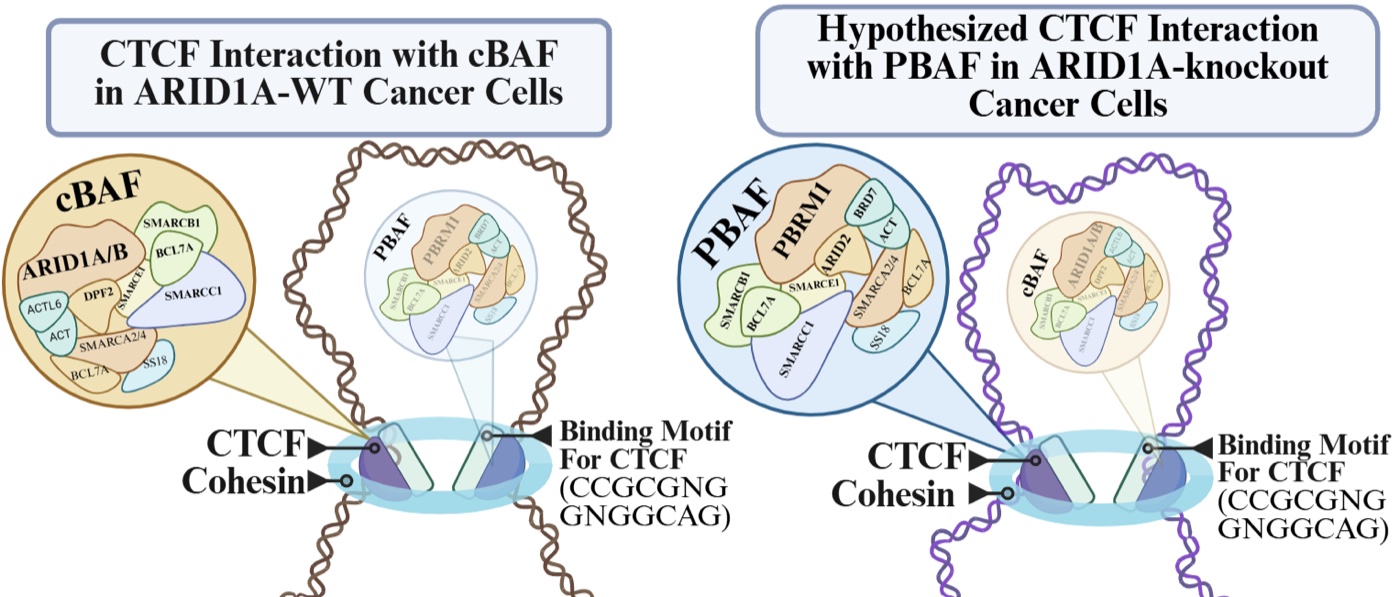
Figure 1. Figure demonstrates the main question of this study: does loss of ARID1A change the interactions in the SWI/SNF complex that associates with CTCF, changing the previously predominant cBAF-CTCF relationship toward more of a PBAF-CTCF relationship?
To test whether CTCF and PBAF physically associate, I conducted protein pulldowns in breast cancer and lymphoma cells, essentially isolating one protein and finding out which proteins remained attached to it.
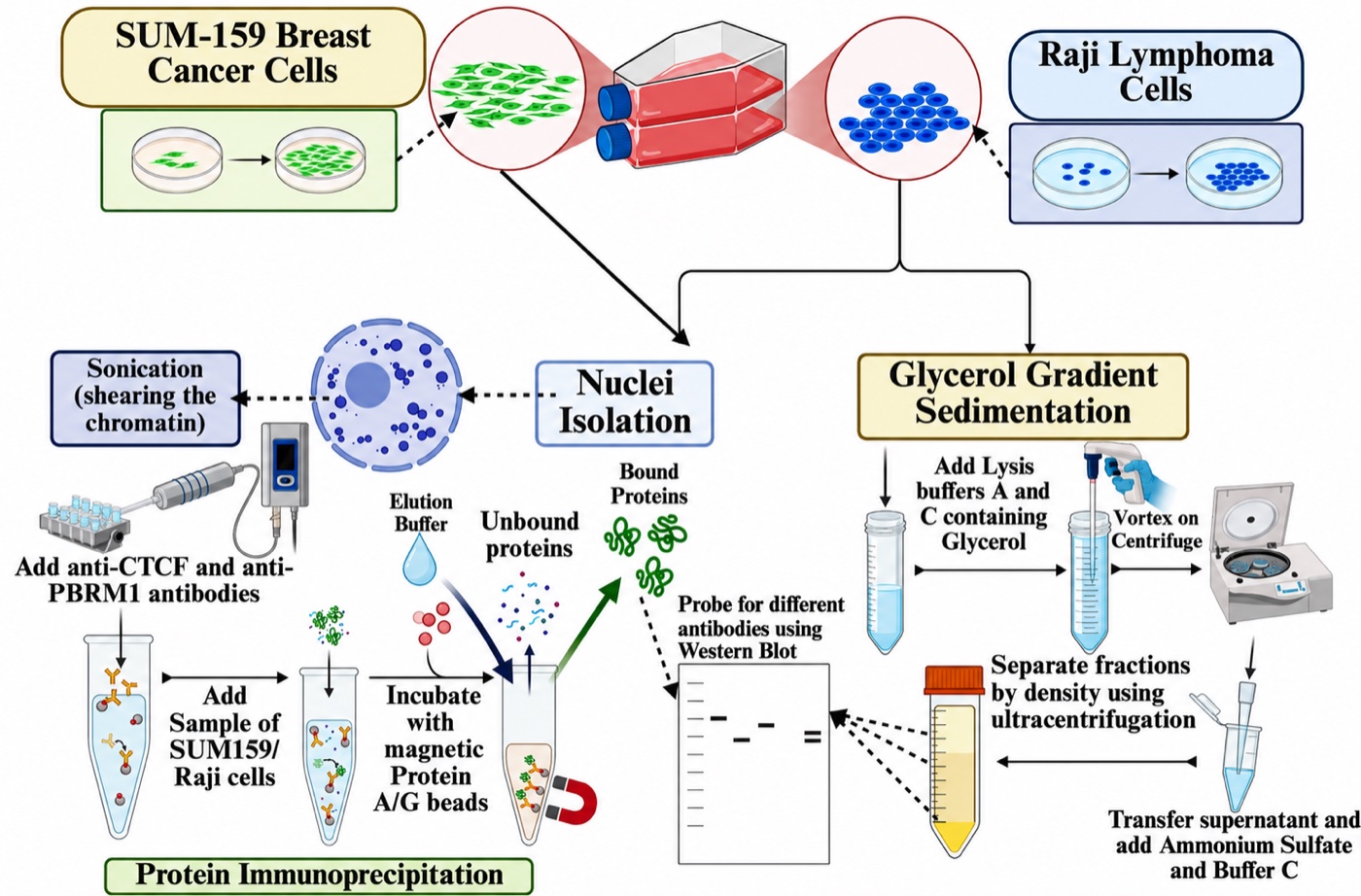
Figure 2. Schematic of method depicting the two biochemical methods used to test CTCF-PBAF interaction. The left side of the figure summarizes the protein immunoprecipitation workflow, where the sheared chromatin was immunoprecipitated with anti-CTCF or anti-PBRM1 and probed by western blot to detect subunits of SWI/SNF and CTCF. The right side depicts the glycerol gradient sedimentation used, in which nuclear fractions were separated by density to be analyzed by western blot to assess co-fractionation of CTCF with PBAF subunits. For both methods, western blots were used to compare protein patterns between ARID1A-WT and ARID1A-deficient conditions.
Across the experiments, CTCF associated with PBAF subunits like PBRM1 and ARID2, while ARID1A was not similarly recovered. Even in ARID1A-deficient Raji cells, CTCF also shifted into heavier fractions containing PBAF components, supporting a potential association between CTCF and PBAF that may compensate when cBAF function is disrupted.
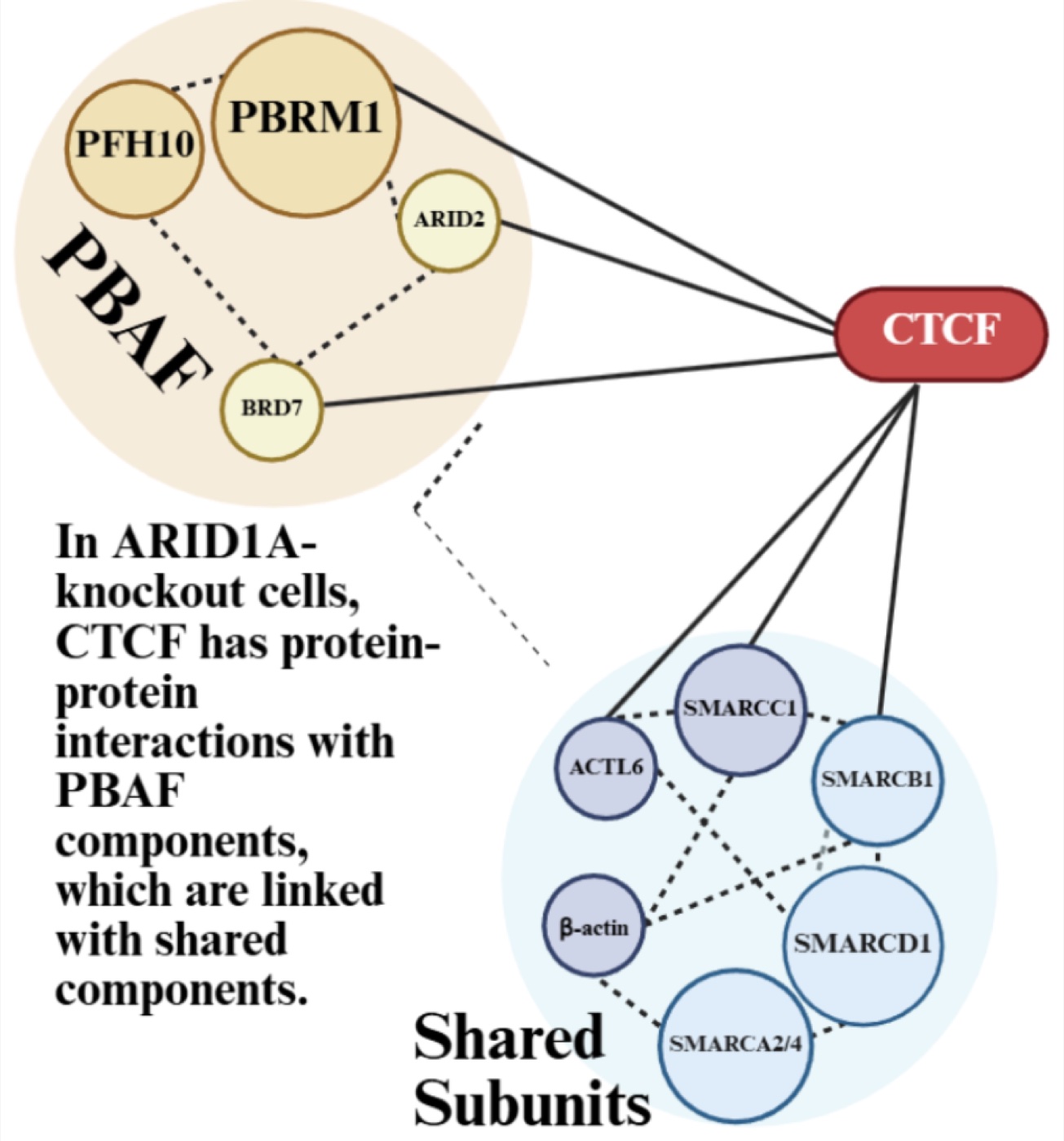
Figure 3. In ARID1A-knockout cells, CTCF shows protein-protein interactions with PBAF components such as PBRM1, ARID2, BRD7, and PFH10, which are in turn linked with subunits shared across SWI/SNF complexes.
However, as this mechanism of transformation was examined in breast cancer and lymphoma cells, we don’t yet know if the same process is involved in transforming endometriosis into ovarian cancer.
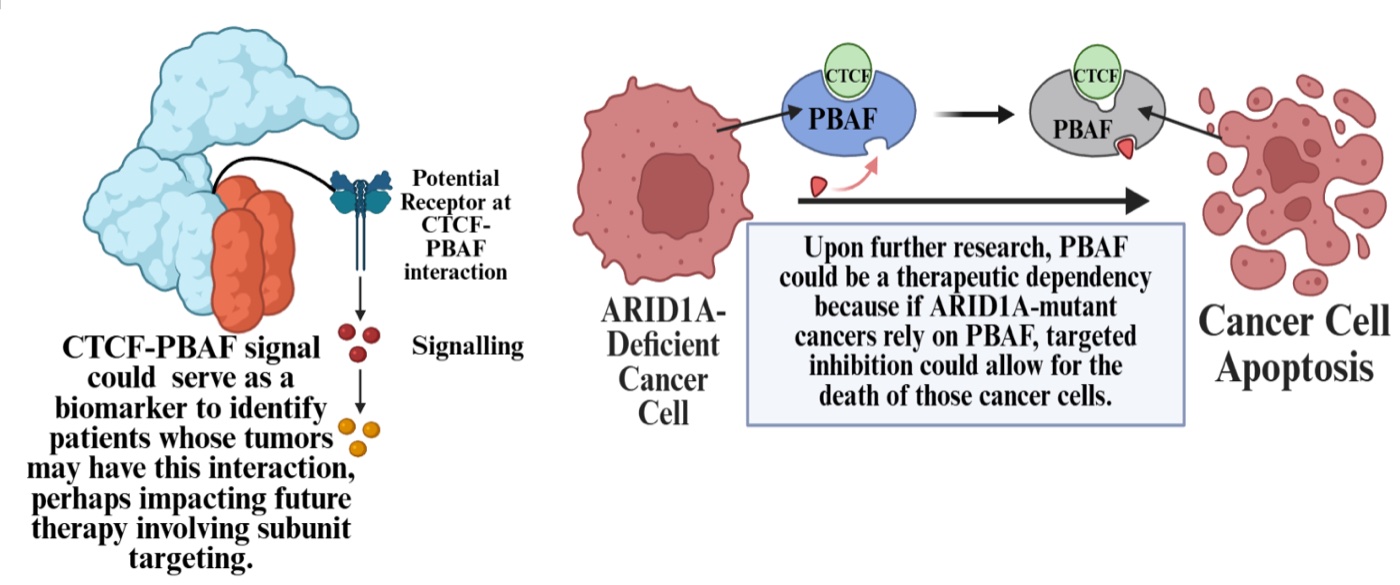
Figure 4. Potential clinical implications of the interaction. A CTCF-PBAF signal could serve as a biomarker to identify patients whose tumors may have this interaction, perhaps impacting future therapy involving subunit targeting. Upon further research, PBAF could be a therapeutic dependency, because if ARID1A-mutant cancers rely on PBAF, targeted inhibition could allow for the death of those cancer cells.
References
- Centers for Disease Control and Prevention. (n.d.). Ovarian Cancer Statistics. Centers for Disease Control and Prevention. https://www.cdc.gov/ovarian-cancer/statistics/index.html
- NIH. (n.d.). Cancer of the ovary - cancer stat facts. SEER. https://seer.cancer.gov/statfacts/html/ovary.html
- Chandler RL, Damrauer JS, Raab JR, Schisler JC, Wilkerson MD, Didion JP, Starmer J, Serber D, Yee D, Xiong J, Darr DB, Pardo-Manuel de Villena F, Kim WY, Magnuson T. Coexistent ARID1A-PIK3CA mutations promote ovarian clear-cell tumorigenesis through pro-tumorigenic inflammatory cytokine signalling. Nat Commun. 2015 Jan 27;6:6118. doi: 10.1038/ncomms7118. PMID: 25625625; PMCID: PMC4308813.
- Kelso TWR, Porter DK, Amaral ML, Shokhirev MN, Benner C, Hargreaves DC. Chromatin accessibility underlies synthetic lethality of SWI/SNF subunits in ARID1A-mutant cancers. Elife. 2017 Oct 2;6:e30506. doi: 10.7554/eLife.30506. PMID: 28967863; PMCID: PMC5643100.
- Mathur R, Alver BH, San Roman AK, Wilson BG, Wang X, Agoston AT, Park PJ, Shivdasani RA, Roberts CW. ARID1A loss impairs enhancer-mediated gene regulation and drives colon cancer in mice. Nat Genet. 2017 Feb;49(2):296-302. doi: 10.1038/ng.3744. Epub 2016 Dec 12. PMID: 27941798; PMCID: PMC5285448.
- Wiegand KC, Shah SP, Al-Agha OM, Zhao Y, Tse K, Zeng T, Senz J, McConechy MK, Anglesio MS, Kalloger SE, Yang W, Heravi-Moussavi A, Giuliany R, Chow C, Fee J, Zayed A, Prentice L, Melnyk N, Turashvili G, Delaney AD, Madore J, Yip S, McPherson AW, Ha G, Bell L, Fereday S, Tam A, Galletta L, Tonin PN, Provencher D, Miller D, Jones SJ, Moore RA, Morin GB, Oloumi A, Boyd N, Aparicio SA, Shih IeM, Mes-Masson AM, Bowtell DD, Hirst M, Gilks B, Marra MA, Huntsman DG. ARID1A mutations in endometriosis-associated ovarian carcinomas. N Engl J Med. 2010 Oct 14;363(16):1532-43. doi: 10.1056/NEJMoa1008433. Epub 2010 Sep 8. PMID: 20942669; PMCID: PMC2976679.
- Zondervan KT, Becker CM, Missmer SA. Endometriosis. N Engl J Med. 2020 Mar 26;382(13):1244-1256. doi: 10.1056/NEJMra1810764. PMID: 32212520.
How to cite this article
Mahamud, J. (2026). Can ARID1A Serve as an Indicator of When Endometriosis Starts to Become Dangerous?. Columbia Scientist, Summer Publishing Program. https://columbiascientist.org/articles/arid1a-endometriosis-ovarian-cancer
© 2026 Jaman Mahamud. This is an open-access article distributed under the terms of the Creative Commons Attribution 4.0 International licence, which permits use, distribution, and reproduction in any medium, provided the original author and source are credited.