Biology
Economic Migration to Africa: Avoiding the World’s Most Dangerous Killers
As Amazon and Tesla expand into Africa, Ebola could hitch a ride. Riley Gillis argues that cheap hygiene rules, smart site choices and ready emergency plans can keep a deadly outbreak from going global.
- Published in
- Edition 2, Spring 2023
- Pages
- 12–14
- Licence
- CC BY 4.0
Abstract This paper reviews research on the communicability of Ebola Virus Disease (EVD)/Similar Infectious Diseases (SID) and possible preventative measures to be employed by at-risk entities. Synthesizing current epidemiological context, routes of transmission, disease control protocol, and addressing common counter arguments in light of the U.S.’s contemporary socio-political climate, this paper argues for governmental and internal regulation of migrating companies (western and Eurasian companies moving part or all of their operations to Africa) to reduce the probability of a catastrophic EVD/SID outbreak.
Keywords Ebola Virus Disease (EVD), Neglected Tropical Disease (NTD), COVID-19, Preventative Health, Public Health, Administrative Controls, Engineering Controls, Economic Regrowth, Sub-Saharan Africa, Regulatory Agency, Public Policy
Introduction
SARS-CoV-2 (COVID-19), which has been contracted by billions and has killed millions of people throughout the world, is now a leading cause of death in America [1]. The pandemic has shed light on the lack of effective emergency response capabilities to public health crises in even the most advanced countries of the world. COVID-19 caused mass chaos and an incredible amount of preventable mortality (~1.4% mortality rate [2]) –– but what would happen if much deadlier microbiological murderers were to enter the world stage?
One such threat is Ebola Zaire, a variant of the Ebola virus and a hemorrhagic fever that has a mortality rate of up to 90% [3] in even the healthiest of individuals. On average, Ebola spreads to 1.5-2.5 people for every one person infected, compared to H1N1 influenza (responsible for the 2009 Swine Flu pandemic) with a 1.5:1 secondary infection rate and COVID-19 with a 1.5-3.5:1 secondary infection rate [4]. Though the data show an average secondary infection rate less than COVID-19’s, Ebola is endemic to areas of rural Africa with less overcrowding and fewer motor vehicles and planes that would contribute to spread in a large city; consequently, these numbers may in fact be higher if outbreaks were to occur in more developed countries. Ebola is contributing to the extinction of other primates in certain areas [5] and has caused outbreaks in humans which, up until recently, were well-confined to Africa. However, with large companies like Amazon and Tesla moving some of their business to Africa [6, 7], Ebola Virus Diseases (EVDs) and similar infectious diseases (SIDs) may quickly become more of an issue for the rest of the world as well.
Because variants of EVDs/SIDs have the capability of causing extinction-level events in humans, companies should regulate their workers’ health practices, including their interactions with animals, their establishment in areas conducive to disease (based on bat migration and rainfall patterns), and their emergency response protocol in the event of infection to reduce the probability that a global outbreak occurs.
Administrative Controls: Health Practices
At a minimum, there are employable administrative controls that can reduce the spread of disease in any environment. Workers should be trained to adhere to enforced health practices such as frequent hand washing [8], quarantining when sick [9], and not interacting with wild animals – with an emphasis on known or potential vectors [10]. While it remains somewhat contested [11] which animals count as “Ebola reservoir hosts,” it is known that people can contract the disease from other sick people via contact with blood or bodily fluids [9], infected non-human primates [12], and bats [12]. Workers should be trained and educated on what symptoms to avoid and which animals to not interact with.
Additionally, Ebola is a highly contagious Bio-Safety Level (BSL) 4 pathogen classified as an inhalation hazard (for personal protective purposes) [13] and is also known to survive in fluids on surfaces [14]. When infected organisms expel bodily fluids through talking, coughing, hemorrhaging, or defecation (including flushing toilets), there is a chance for aerosolization of these microscopic biohazards [15], suspending infectious material in the air where they can settle on surfaces or potentially be inhaled by healthy individuals. Due to the high communicability of viral hemorrhagic fevers such as EVD/SID, it is critical that commonly handled surfaces be disinfected frequently, workers wash hands after handling potentially contaminated surfaces, and the sick be secluded from the healthy.
As the world has come to understand from the COVID-19 pandemic, these practices should be employed even when no one appears to be sick, because asymptomatic people can still spread disease while the pathogen is incubating inside of their body or once they have mostly recovered from illness [16]. These practices are extremely low cost, can be employed easily and conveniently, and could very well prevent a cataclysmic outbreak of EVD/SID from emerging.
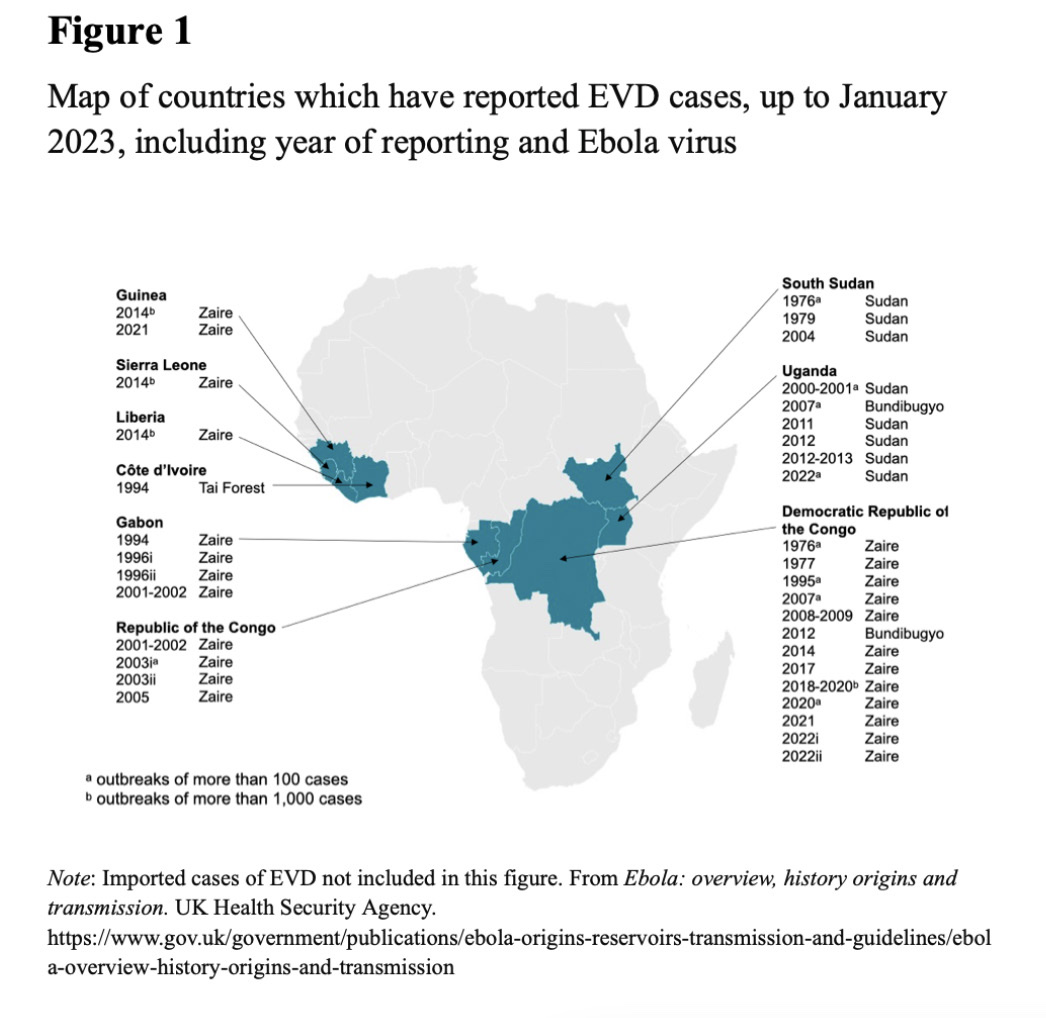
Figure 1. Map of countries which have reported EVD cases, up to January 2023, including year of reporting and Ebola virus
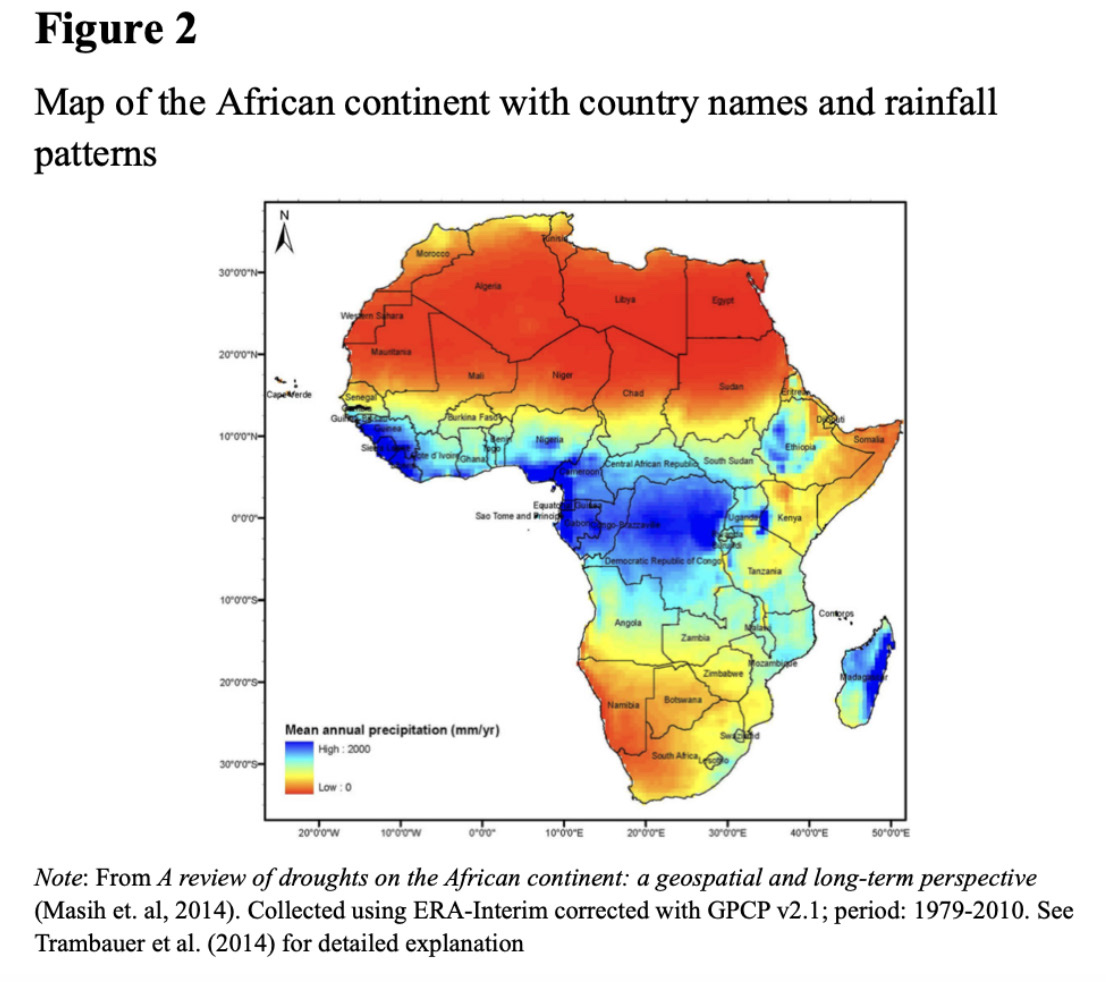
Figure 2. Map of the African continent with country names and rainfall patterns
Engineering Controls: Geographic Barriers
Secondly, establishing business in areas not endemic to EVD/SID [17] and not rampant with displaced animals due to deforestation or annual migration [18, 19] is critical to the minimization of EVD/SID exposure probability [20]. The most effective control for reducing the spread of disease is to remove potential exposure to the hazard altogether; creating smart geographic barriers in this case could effectively remove the hazard of contracting EVD/SID while not forcing companies to change their procedures or operations whatsoever. This is an attractive option for companies who are worried implementing other preventative measures would inhibit productivity or profitability. Local and national governments should work with any prospective migrating companies and their home countries’ governments to identify smart geographic choices to prevent the spread of disease. Intuitively, placing businesses in areas where reservoir (natural carrier) host to human interaction is likely – typically resulting from migrating/displaced animals [21] – will increase the chances that a worker, their family member, or their pet contracts the disease and is patient 0 for an outbreak.
Furthermore, research shows that rainfall patterns have a large effect on animal movement and subsequent animal-human interaction that would otherwise be unpredictable [22] (see Figures 1 [23] & 2 [24, 25]). In addition to establishing international businesses in areas that are not known host migration pathways and not near areas dense with animal displacement, not establishing businesses in areas with historically heavy or frequent rainfall patterns will further decrease the probability that wild infectious animals lead to human EVD/SID hosts. Though this does limit opportunities for expansion into areas of west and central Africa – particularly coastal, equatorial countries and the Democratic Republic of Congo, at-risk entities that are still allowed to and choose to migrate can substantially reduce the risk of infection by utilizing mentioned administrative and post-infection controls.
Post-Infection Control: Emergency Response Protocol
Having an emergency response protocol is essential for effective disease control in the event of an infection. As observed with the global response to the COVID-19 pandemic, when procedures are not already in-place to respond to an outbreak, humanity quickly falls too far behind to ever catch up to the pathogen and stop it.
Migrating companies should implement an infection response SOP detailing red-flag symptoms, possible routes of transmission, medical care options, quarantine protocol, and return-to-work protocol for their workers in the event of possible EVD/SID exposure. It is incredibly important with illnesses as contagious as hemorrhagic fevers to be ahead of the curve in terms of infection response to prevent an epidemiological “blitzkrieg” moment. When something is capable of spreading to an entire population in the matter of a few short weeks [26], every second of response counts and no time can be wasted on being confused about what the next steps are. For this reason, every worker should be familiar with the infection response SOP and ready to execute necessary duties, whether it be as an infected individual or an agent of infection control.
Public Health Requirements: Necessary or Overkill?
Some might argue that we should focus solely on repairing the economy rather than preparing for the next pandemic [27]; after all, we just recovered from COVID-19, and people need to put food on the table, right?
Not quite. While these valid arguments focus on the notion that there are more important things to do than worry about getting sick all the time, they address a stasis different than that addressed by this paper. The interest of public health does not advise the economy to completely “steer clear” of the entire African continent, nor does it argue that migrating companies should not be able to generate capital for themselves, employees, and surrounding individuals. There are plenty of welcome consequences, ranging from job market and economic growth to societal progression of these nations and subject companies, of economic migration. But safety should always be a number one priority, and in cases of infectious disease, an outbreak in Africa can end up affecting every other continent on Earth. While there are important things that any reasonable person should worry about –– like putting food on the table –– employees and locals should not have to worry about themselves or their families falling ill with incredibly gruesome yet preventable pathogens.
Additionally, Ebola is a unique challenge, for it has the capacity to cause extinction-level events, unlike COVID-19. As such, EVDs/SIDs should be a number one priority for administration and government, even in light of financial hardships surrounding the previous pandemic. If the global economy is migrating toward Africa, we should take whatever preventative measures necessary to ensure the health and safety of locals, workers, and the world, even if that means it takes longer to migrate or companies are making slightly less money. To that point, however, the preventative measures detailed in this paper are incredibly low-cost, convenient, and worth the minimal amount of time it would take to implement them in comparison to the universally catastrophic consequences of an EVD/SID outbreak.
Conclusion
Ultimately, health and security should always be a number one priority of businesses, governments, and their regulatory agencies. Failing to adhere to specific, yet common sense and easy to follow, preventative measures in geographic regions endemic to the most serious pathogenic microbes known to man risks causing catastrophes for the global community. Foreign entities that have the potential to cause an increase in migration, population density, and human-animal interaction especially, should make preventative efforts in these cases. When substantial corporations move business to EVD/SID “hot zones” without proper preventative measures, they risk the lives of their workers, their community, and the human race as a whole. Governments, regulatory agencies, and businesses should work together to train employees on preventative health practices like hand washing and isolation from reservoir hosts, choose smart locations of sites that limit disease exposure based on animal displacement and rainfall patterns, and implement the proper emergency response in the case of employee infection to reduce the spread of dangerous yet neglected tropical diseases like the Ebola Virus Disease and other similar infectious diseases.
References
Shiels, M.S., Haque, A.T., Berrington de González, A., & Freedman, N.D. (2022). Leading Causes of Death in the US During the COVID-19 Pandemic, March 2020 to October 2021. JAMA Intern Med, 182(8), 883–886. doi:10.1001/jamainternmed.2022.2476
Worldometer. (2020). Wuhan Coronavirus Death Rate - Worldometer. Worldometers.info. https://www.worldometers.info/coronavirus/coronavirus-death-rate/
Kadanali, A., & Karagoz, G. An overview of Ebola virus disease. (2015). North Clin Istanb. 2015, 2(1), 81-86. doi:10.14744/nci.2015.97269. https://pubmed.ncbi.nlm.nih.gov/28058346/
Eisenberg, J. (2020). R0: How Scientists Quantify the Intensity of an Outbreak Like Coronavirus and Its Pandemic Potential. Sph.umich.edu. https://sph.umich.edu/pursuit/2020posts/how-scientists-quantify-outbreaks.html
Zimmerman, D. M., Hardgrove, E., Sullivan, S., Mitchell, S., Kambale, E., Nziza, J., Ssebide, B., Shalukoma, C., Cranfield, M., Pandit, P. S., Troth, S. P., Callicrate, T., Miller, P., Gilardi, K., & Lacy, R. C. (2023). Projecting the impact of an ebola virus outbreak on endangered mountain gorillas. Scientific Reports, 13(1), 5675. https://doi.org/10.1038/s41598-023-32432-8. https://www.nature.com/articles/s41598-023-32432-8
TheAfricaReport. (2022). Amazon accelerates in Africa, much to the chagrin of local players. The Africa Report.com. https://www.theafricareport.com/234135/amazon-accelerates-in-africa-much-to-the-chagrin-of-local-players/.
Adeyemi, D. (2022). Tesla’s African expansion is imminent but is it reasonable to drive one in Lagos? TechCabal. https://techcabal.com/2022/01/24/teslas-african-expansion-drive-lagos/.
Ilesanmi, O.S., & Alele, F.O. (2015). The effect of Ebola Virus Disease outbreak on hand washing among secondary school students in Ondo State Nigeria, October, 2014. Pan Afr Med J., 22(1), 24. doi:10.11694/pamj.supp.2015.22.1.6614. https://www.ncbi.nlm.nih.gov/pmc/articles/PMC4695531/
Dénes, A., & Gumel, A.B. (2019). Modeling the impact of quarantine during an outbreak of Ebola virus disease. Infect Dis Model, 4, 12-27. doi:10.1016/j.idm.2019.01.003. https://www.ncbi.nlm.nih.gov/pmc/articles/PMC6382747/
Osterholm, M.T., Moore, K.A., Kelley, NS., et al. (2015). Transmission of Ebola viruses: what we know and what we do not know [published correction appears in MBio, 6(4), e01154. Formenty, Pierre [Deleted]]. mBio, 6(2), e00137. doi:10.1128/mBio.00137-15
Bokelmann, M., Vogel, U., Debeljak, F., et al. (2021). Tolerance and Persistence of Ebola Virus in Primary Cells from Mops condylurus, a Potential Ebola Virus Reservoir. Viruses. (11):2186. doi:10.3390/v13112186
Hayman, D.T.S. (2019). African Primates: Likely Victims, Not Reservoirs, of Ebolaviruses. J. Infect Dis. 220(10):1547-1550. doi:10.1093/infdis/jiz007
Centers for Disease Control and Prevention. (2022). Ebola P.P.E. frequently asked questions. https://www.cdc.gov/vhf/ebola/healthcare-us/ppe/faq.html.
Fischer, R., Judson, S., Miazgowicz, K., Bushmaker, T., Prescott, J., & Munster, V.J. (2015). Ebola Virus Stability on Surfaces and in Fluids in Simulated Outbreak Environments. Emerg Infect Dis. 21(7):1243-1246. doi:10.3201/eid2107.150253
Ehsanifar, M. (2021). Airborne aerosols particles and COVID-19 transition. Environ Res 200:111752. doi:10.1016/j.envres.2021.111752
Mbala, P., Baguelin, M., Ngay, I., et al. (2017). Evaluating the frequency of asymptomatic Ebola virus infection. Philos Trans R. Soc Lond B. Biol Sci. 372(1721):20160303. doi:10.1098/rstb.2016.0303
Rugarabamu, S., Mboera, L., Rweyemamu, M., et al. (2020). Forty-two years of responding to Ebola virus outbreaks in Sub-Saharan Africa: a review. B.M.J. Glob Health. 5(3):e001955. doi:10.1136/bmjgh-2019-001955
Demaze, M., Sufo-Kankeu, R., & Sonwa, D. J. (2020). Analysing the Narrative and Promises of “Avoided Deforestation” Implementation in Central Africa. The Intern. Forestry Review, 22(2), 257–268. https://doi.org/10.1505/146554820829403469
Trayford, H.R., & Farmer, K.H. (2013). Putting the Spotlight on Internally Displaced Animals (IDAs): A Survey of Primate Sanctuaries in Africa, Asia, and the Americas. American journal of primatology. 75(2):116-134. doi:10.1002/ajp.22090
Nyakarahuka, L., Ayebare, S., Mosomtai, G., et al. (2017). Ecological Niche Modeling for Filoviruses: A Risk Map for Ebola and Marburg Virus Disease Outbreaks in Uganda. PLoS Curr. doi: 10.1371/currents.outbreaks.07992a87522e1f229c7cb023270a2af1
Caron, A., Bourgarel, M., Cappelle, J., Liégeois, F., De Nys, H.M., & Roger, F. (2018). Ebola Virus Maintenance: If Not (Only) Bats, What Else?. Viruses. 10(10):549. doi:10.3390/v10100549
Schmidt, J.P., Park, A.W., Kramer, A.M., Han, B.A., Alexander, L.W., & Drake, J.M. (2017). Spatiotemporal Fluctuations and Triggers of Ebola Virus Spillover. Emerg Infect Dis. 23(3):415-422. doi:10.3201/eid2303.160101
Public Health England. (2016). Ebola: overview, history, origins and transmission. GOV.UK. https://www.gov.uk/government/publications/ebola-origins-reservoirs-transmission-and-guidelines/ebola-overview-history-origins-and-transmission
Masih, I., Maskey, S., Mussá, F. E. F., & Trambauer, P. (2014). A review of droughts on the African continent: a geospatial and long-term perspective. Hydrology and Earth System Sciences, 18(9), 3635–3649. https://doi.org/10.5194/hess-18-3635-2014
Trambauer, P., Maskey, S., Werner, M., Pappenberger, F., van Beek, L. P. H., & Uhlenbrook, S. (2014). Identification and simulation of space–time variability of past hydrological drought events in the Limpopo River basin, southern Africa. Hydrology and Earth System Sciences, 18(8), 2925–2942. https://doi.org/10.5194/hess-18-2925-2014
Chowell, G. & Nishiura, H. (2014). Transmission dynamics and control of Ebola virus disease (EVD): a review. BMC Med. 12:196. doi:10.1186/s12916-014-0196-0
Vasilopoulos, A., Pantelidaki, N.A., Tzoura, A., et al. (2022). Factors underlying denial of and disbelief in COVID-19. J Bras Pneumol. 48(5):e20220228. doi:10.36416/1806-3756/e20220228
How to cite this article
Gillis, R. (2023). Economic Migration to Africa: Avoiding the World’s Most Dangerous Killers. Columbia Scientist, 2, 12–14. https://columbiascientist.org/articles/economic-migration-to-africa
© 2023 Riley Gillis. This is an open-access article distributed under the terms of the Creative Commons Attribution 4.0 International licence, which permits use, distribution, and reproduction in any medium, provided the original author and source are credited.