Science Art
The Abnormality of Humans
A white sculpted tower of deliberately uneven blocks reads as a strand of DNA, its flaws and lumpy joins standing in for the imperfection of cells and of life itself.
- Published in
- Edition 2, Spring 2023
- Pages
- 22
- Licence
- CC BY 4.0
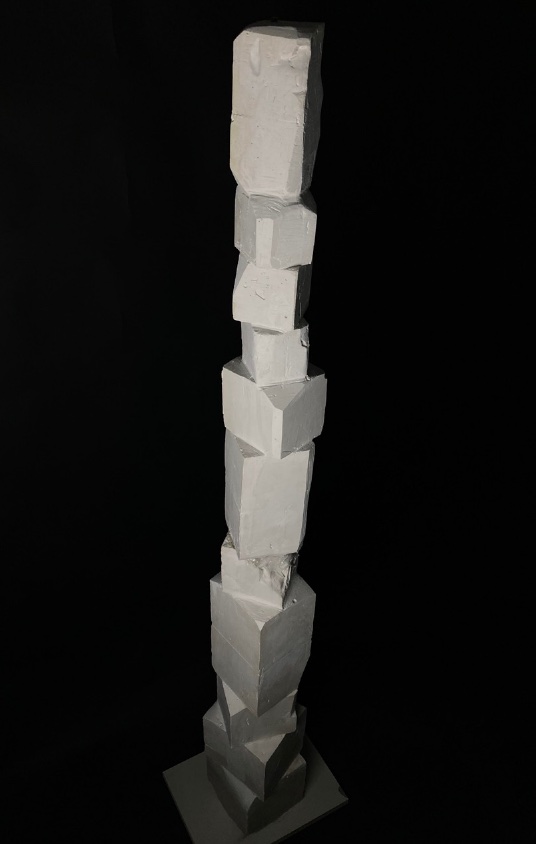
Each of the blocks are imperfect, not complete cubes. The complexity of life can be interpreted upon the building blocks of the structure, creating an interpreted view of a DNA linkage. The abnormalities in the different blocks can show how life and cells are inherently imperfect, making it human.
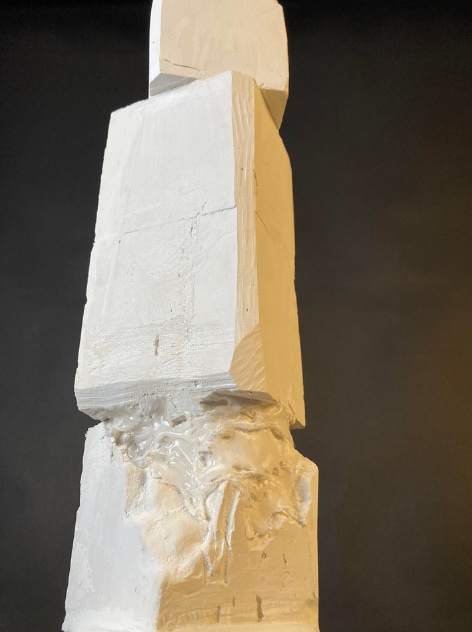
Close view of a block joined to the one below by a rough, textured seam
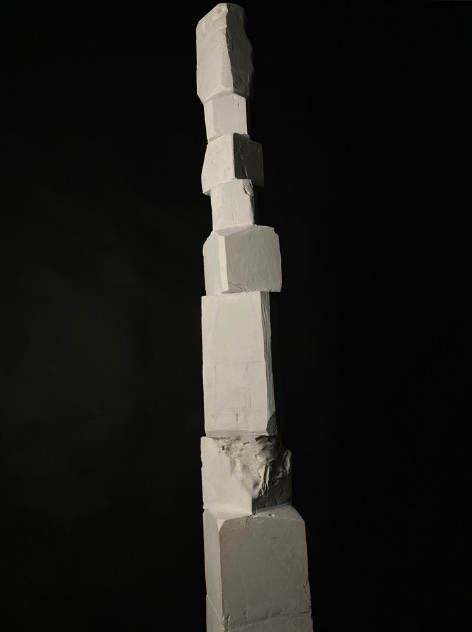
The tower photographed against a black backdrop
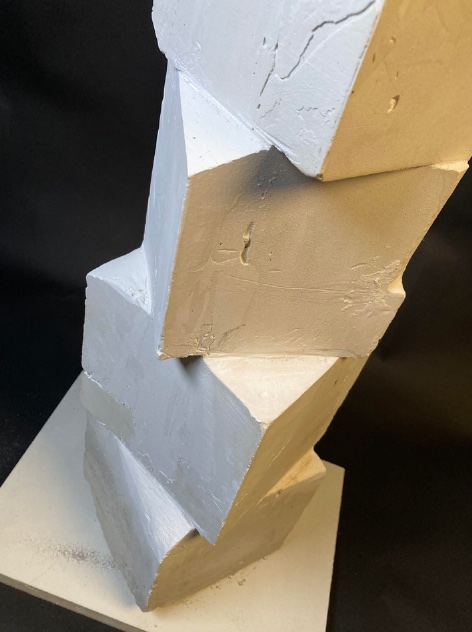
Angled close-up of offset blocks near the base
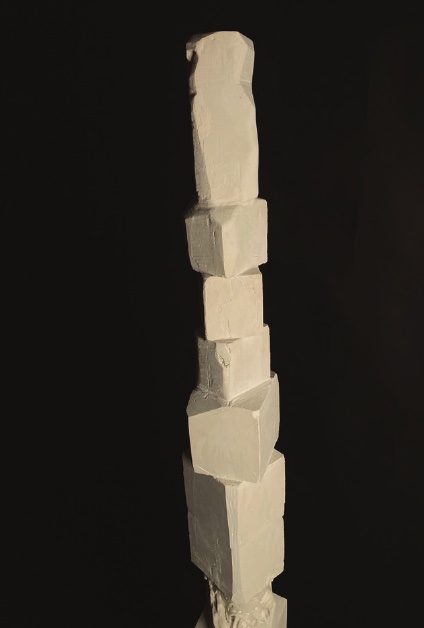
The tower seen from a low angle
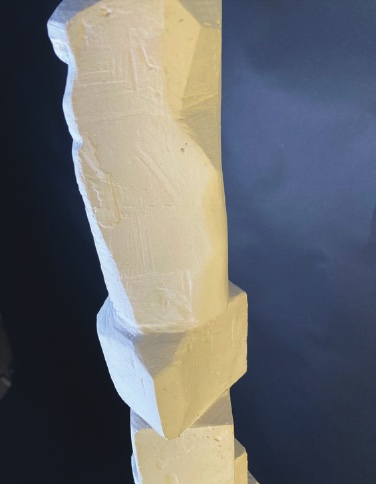
Close-up of uneven, faceted upper blocks
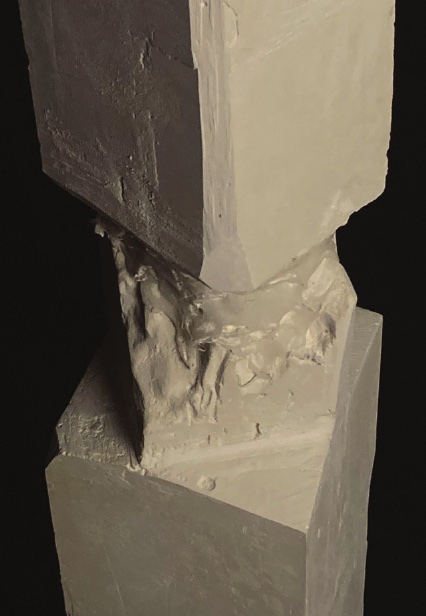
Close-up of a sculpted joint between two blocks
How to cite this article
Tong, A. C. (2023). The Abnormality of Humans. Columbia Scientist, 2, 22. https://columbiascientist.org/articles/abnormality-of-humans
© 2023 Aiden C. Tong. This is an open-access article distributed under the terms of the Creative Commons Attribution 4.0 International licence, which permits use, distribution, and reproduction in any medium, provided the original author and source are credited.